Stop Obsessing Over Your Credit Score

Everyone stresses about their credit score like it’s this magical number that has to be perfect before you can buy a house. ⁠ ⁠ But is it? ⁠ ⁠

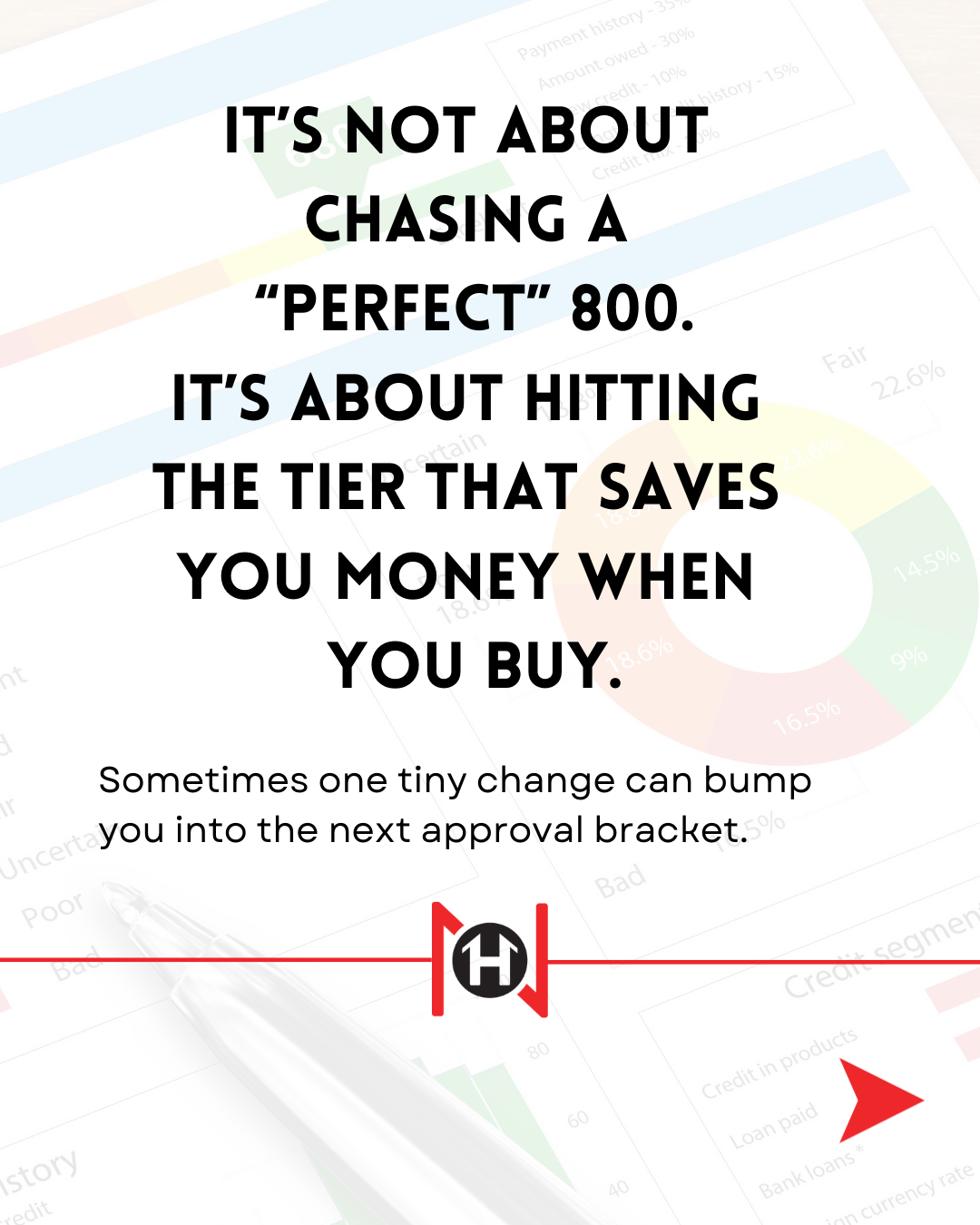
It’s not about having an 800. It’s about being in the right 𝘁𝗶𝗲𝗿 so the bank doesn’t overcharge you.⁠ And here’s the part nobody tells you: tiny moves can make a huge difference.⁠ ⁠

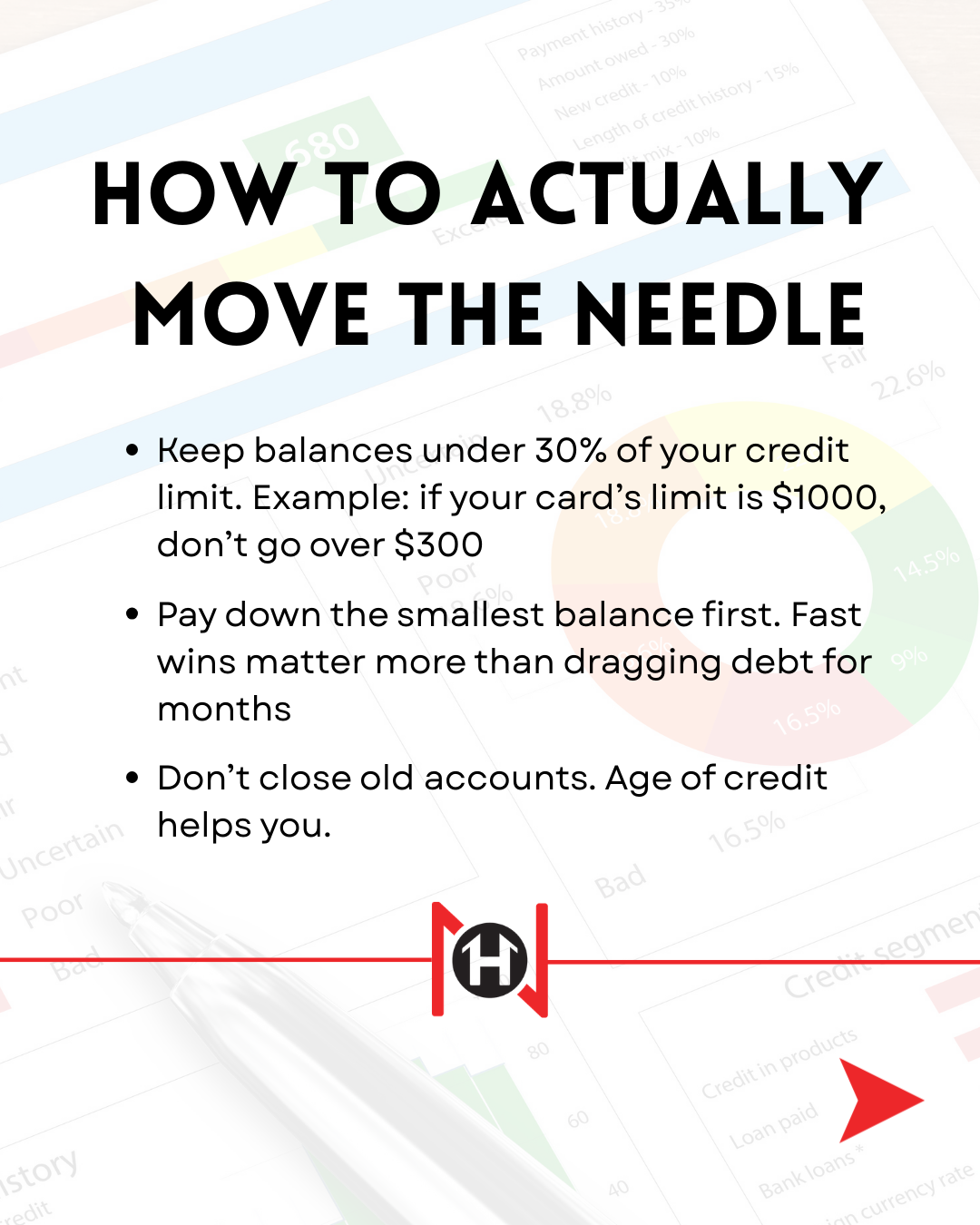
💳 Keep your cards under 30% of the limit (if you’ve got a $1,000 limit, don’t carry more than $300).⁠ ⁠

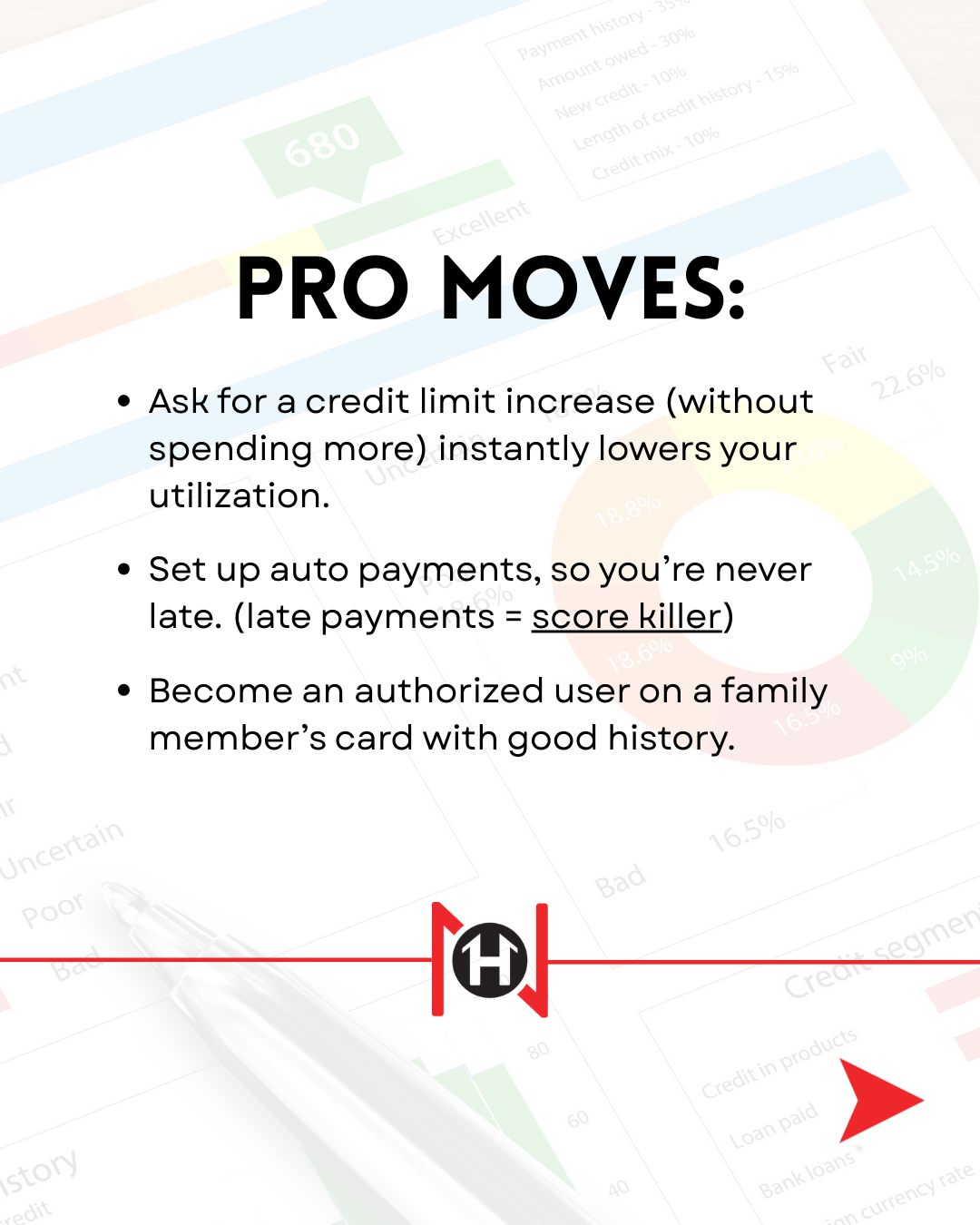
💳Ask for a credit limit increase, then don’t touch it. That alone can lower your utilization overnight.⁠ ⁠

❌Don’t close old accounts — even the dusty card you never use is quietly helping your score.⁠ ⁠

👩🏻‍🤝‍👨🏼And if you can, get added as an authorized user on someone else’s solid card. Their history helps you.⁠ ⁠

None of this is about perfection. It’s about positioning yourself to bump into the next approval bracket and save money every single month.⁠ ⁠

Most people don’t live in their homes as long as they plan to

Most buyers go into a purchase thinking, “This is it. This is the one. We’re here for the long haul.”

And I love that optimism. Truly.

But here’s something I’ve learned after watching hundreds of real estate journeys unfold in Winnipeg:

Most people don’t live in their homes as long as they plan to.

Not because they made a bad choice, but because life moves faster than we expect.

Jobs change.

Families grow (or shrink).

Commutes start to matter more.

Stairs feel different five years later.

Maintenance hits harder than it did at move-in.

That’s why one of the most important things I talk to buyers about before they ever fall in love with a house is resale.

Even if this feels like a “forever home,” it’s smart to assume it might not be.

That doesn’t mean buying with fear.

It means buying with foresight.

I want my buyers to love their home, the light, the layout, the way it feels when they walk in, and know that if life changes, they’re in a strong position to sell without stress or regret.

The best purchases sit at the intersection of emotion and strategy.

If buying is on your radar this year and you want someone in your corner who’s thinking about your future self just as much as your present one, let’s talk.

Save this for later or send it to someone who’s house hunting right now 🤍

How to Price Your Home Correctly in the Winnipeg Market

What’s the right price to list your home for sale in Winnipeg so you attract buyers and maximize your return?

Pricing your home accurately from the very beginning is one of the most powerful decisions you’ll make as a home seller.

Getting your price right can mean more interest, faster offers, and a stronger final sale price. Price it too high, and buyers scroll past—price it too low, and you leave money on the table. Here’s how to strike a balance in the Winnipeg market today. 

Know the Winnipeg Market

Winnipeg’s housing market has seen ups and downs in recent years, with average sale prices shifting as demand and inventory change. Buyers often focus on homes in the mid‑range price points, which see the most activity and even bidding scenarios when priced well. 

But what does “the right price” really mean? It’s all about understanding current supply and demand and how buyers are behaving right now—not relying on what homes sold for last year.

Start With a Comparative Market Analysis

A Comparative Market Analysis (CMA) is foundational to pricing your home correctly. This involves looking at:

  1. Recent sales of homes similar to yours

  2. Active listings buyers are comparing yours against

  3. Neighbourhood trends in how quickly homes sell and at what price

By focusing on recent and local data (ideally within the last 60‑90 days and within your neighbourhood), you get a realistic sense of what buyers are willing to pay today. 

A CMA is far more accurate than relying on online estimators or public tax assessment values, which may lag behind current market activity. 

Price for the Market, Not Your Emotions

It’s natural to feel attached to your home’s value—but buyer behaviour doesn’t account for sentiment. Pricing based on emotion or past purchase price can cause your listing to sit without offers. 

Homes priced too high often end up:

  1. Spending more time on the market

  2. Triggering future price reductions

  3. Selling for less than they might have if priced correctly initially 

On the flip side, a price that reflects real market value signals to buyers that your home is competitive and worth their consideration. 

Strategic Price Positioning

There are a few common pricing approaches, each with pros and cons:

  1. Market‑value pricing: Set your price in line with recent comparable sales to attract serious buyers. 

  2. Slightly under market: Some sellers use this strategy to stimulate multiple offers, but it only works in certain conditions and requires careful execution. 

  3. Above market: Risky unless your home has truly exceptional features or upgrades—buyers will likely compare it to more affordable alternatives. 

Your REALTOR® will recommend a strategy based on current trends—and what’s realistic for your specific property.

Update Your Price When Needed

Even with a strong initial price, sometimes adjustments are necessary:

  1. If your listing sees little activity

  2. If offers are significantly below expectations

  3. Or if market conditions shift

Your agent will monitor activity and advise when a price change makes sense. Timely adjustments help maintain buyer interest and prevent your home from becoming “stale” on the market. 

The Bottom Line

Pricing your home correctly isn’t guesswork—it’s a strategy backed by real data and local expertise. The goal is to land squarely in the price range where serious buyers are actively looking in Winnipeg today. Getting that right can make your home sell faster and for a better net result.

Selling your home is a big financial move—you deserve an accurate valuation and a pricing strategy tailored to Winnipeg’s market.

Ready to price your home with confidence?

As a trusted local expert, I’m here to help. Book a home valuation with me, Nicole Hacault, Realtor in Winnipeg, Manitoba, and we’ll determine the price that sets your sale up for success.

👉 Book your valuation today and take the first step toward a smooth, successful sale.

Stay informed this winter with the City’s Snow Operations Map ❄️🚜

Get real-time updates on snow clearing progress, parking bans, winter routes, snow zones, roads, sidewalks, and bike paths — all in one place.

What you can do:

✔️ Check current parking bans in your area

✔️ See if your street is a designated winter route

✔️ Track major snow-clearing operations by neighbourhood

✔️ Search your exact address for detailed updates

✔️ Filter by road, sidewalk, or bike path status

Update Schedule:

Snow clearing progress is updated during major snow events — starting after snowfall ends — with updates twice daily (around 7:00 a.m. and 7:00 p.m.), plus additional updates as areas are completed.

⚠️ Note: The map is not updated during maintenance operations or when crews are addressing isolated trouble spots.

Stay prepared, avoid tickets, and plan your travel safely this winter. Check the Snow Operations Map before you park or head out!

How Is Anyone Even Affording A House Right Now?

You know what question we keep getting lately?

“How is anyone even affording a house right now?”

And honestly…we get it.

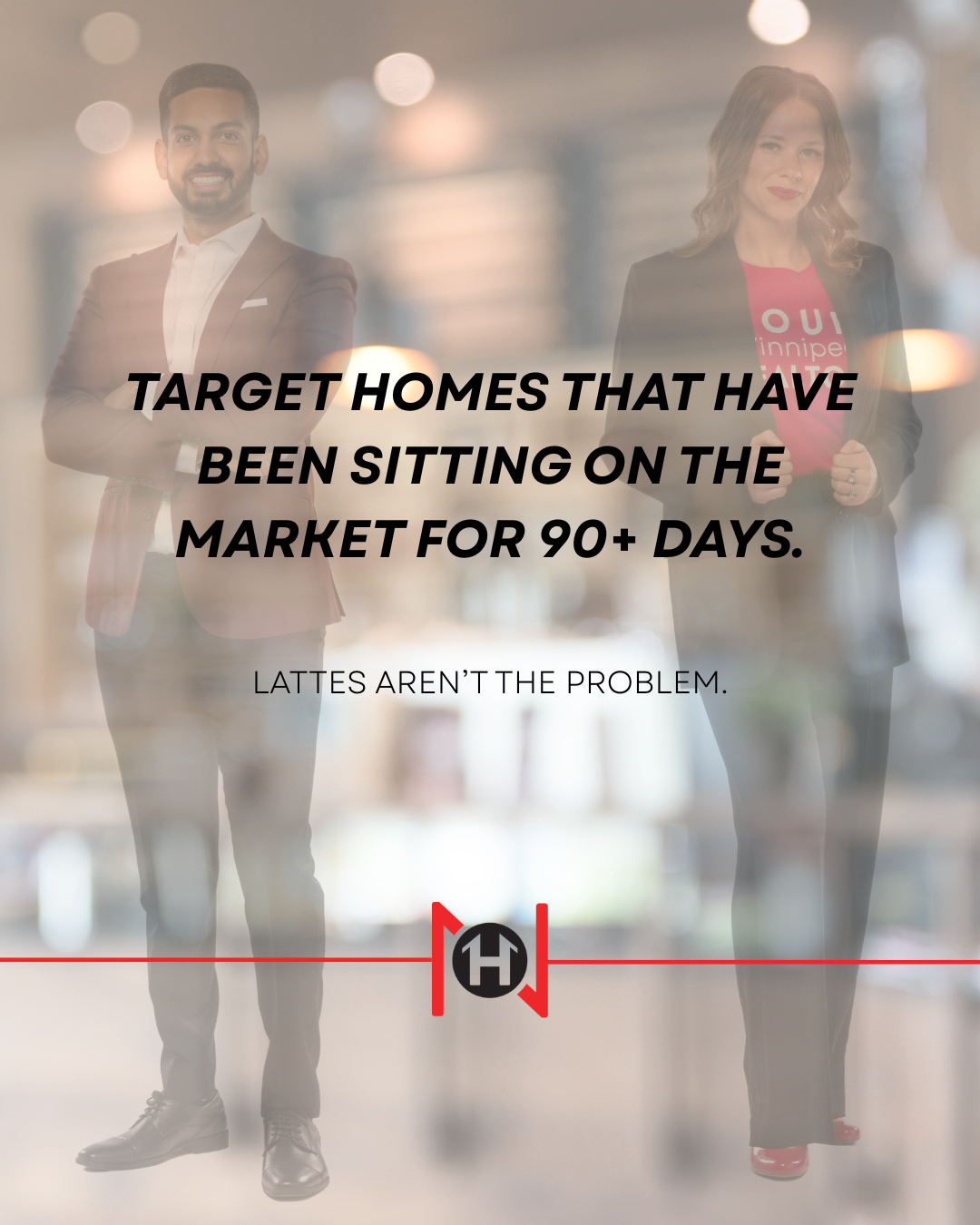
Rates are high, prices feel high, and the “just don’t go out for lattes” advice isn’t cutting it.

But here’s the thing: people are buying homes. Not because they skipped Starbucks or cut out Netflix.

They’re getting creative.

They’re teaming up with siblings or friends.

They’re renting out basements.

They’re buying the house with ugly carpet and fixing it later.

They’re moving 20 minutes out of town.

They’re scooping up new construction because builders are handing out incentives.

It’s not perfect. It’s not “your dream”. Sometimes it’s frustrating. But it’s real.

Our buyers who are winning right now aren’t following the cookie-cutter advice. They’re finding overlooked homes with bad photos, funky layouts, or dated finishes.

They’re offering on houses that sat for 90 days.

They’re buying “grandma houses” and slowly making them their own.

So if you’re sitting there wondering how it’s possible… this is it.

Not magic. Not luck. Just a different playbook.

And that’s what we want to show you — the raw, unfiltered ways people are getting keys in their hands today.

What You Need To Know When Buying A 1970s Home

If you’re buying a 70s home, this is something you need to know.👈

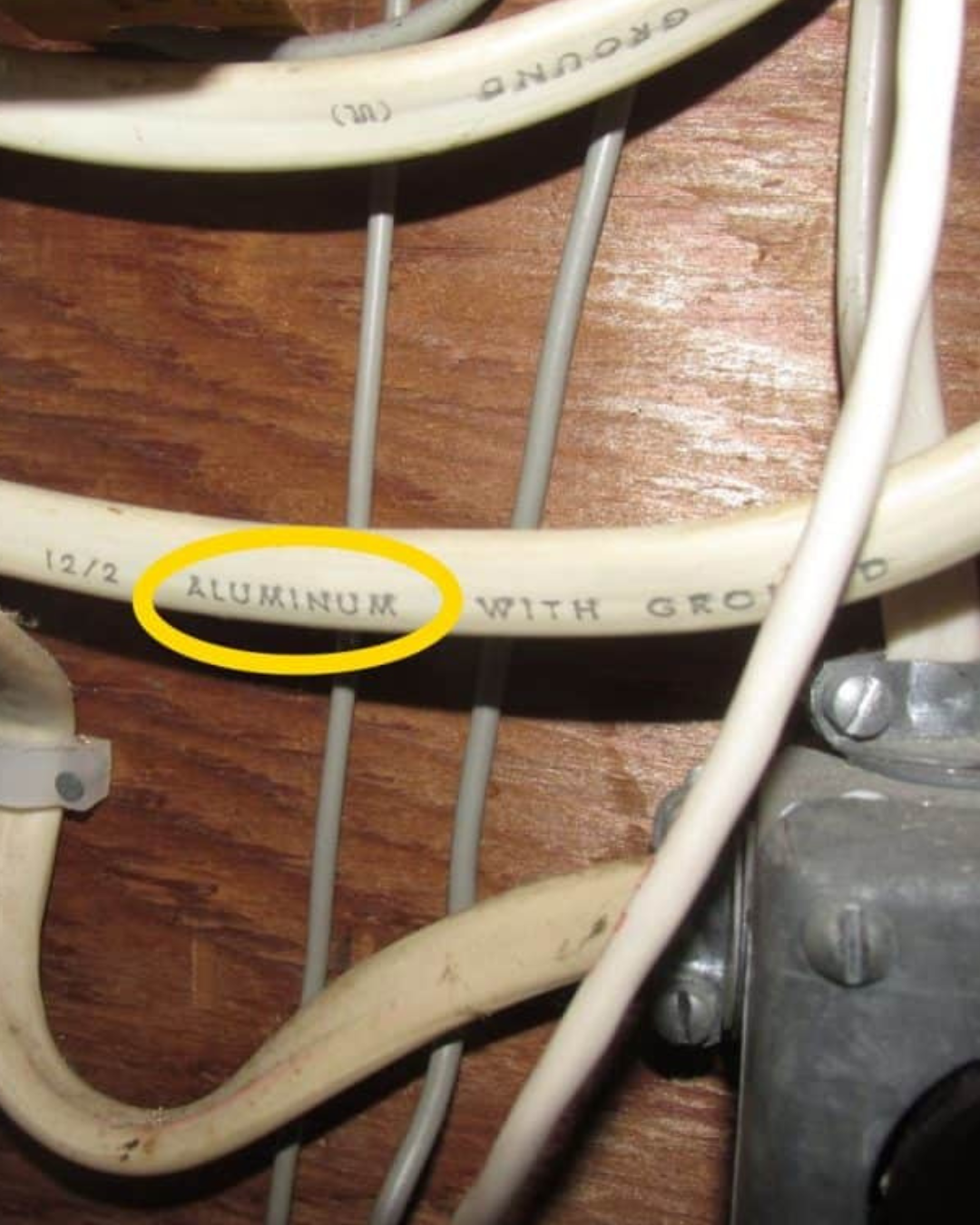
Aluminum wiring⚡ is starting to be treated the same way knob and tube once was.

Not illegal.

Not always unsafe.

But increasingly disliked by insurers and lenders.

I’m already seeing:👀

• Extra insurance conditions

• Required electrical inspections

• Higher premiums

• Limited provider options

And the industry trend suggests that in the next 5–10 years, removal may become the expectation, not the exception.

This is exactly why due diligence matters before you fall in love with a house.🧐

Ask questions.

Get inspections.

Understand future costs, not just today’s price.🙂

Aluminum Wiring in Your Home: What Every Homeowner Should Know

Ever wondered why aluminum wiring in older homes is suddenly becoming a big deal for insurance and lending?

Here’s what it means for you — especially if you’re living in or considering buying a home built in the 1970s.

Aluminum wiring isn’t just old technology — it’s increasingly raising eyebrows with insurers and lenders. Like knob‑and‑tube wiring before it, aluminum wiring is now being treated as a potential “deal breaker” unless it’s properly inspected, mitigated, or replaced. 

Why Aluminum Wiring Was Used in the First Place

In the late 1960s–1970s, the price of copper soared. Builders turned to aluminum as a cheaper alternative for branch circuit wiring. At the time, it seemed like a reasonable choice — but aluminum behaves differently than copper. Experts note that, over time, some types of aluminum wiring can develop issues that increase the risk of loose connections, overheating, and potential fire hazards. 

The Problem According to Today’s Insurance Industry

Here’s the reality: many insurance companies view aluminum wiring as a higher‑risk feature compared to copper. Some may:

  1. Refuse to insure a home with aluminum wiring unless conditions are met. 

  2. Require a professional electrical inspection (and copies of the report) before offering coverage. 

  3. Charge higher premiums due to perceived fire risk. 

  4. In rare cases, decline coverage entirely unless the wiring is corrected or replaced. 

Lenders often require proof of insurance before closing a mortgage, so this insurability issue can meaningfully delay or even derail a sale. 

So Is Aluminum Wiring Unsafe?

Not necessarily in every case. The wiring itself isn’t inherently dangerous when properly installed and maintained. However, older aluminum wiring — especially single‑strand wire found in many 1970s homes — ages differently than copper. It can oxidize, loosen due to temperature changes, or degrade at connection points, which increases the potential for heat buildup and fire risk over time. 

That’s why today’s insurers want professional evaluation and documentation before they’ll underwrite policies. 

What Homeowners Can Do

If you live in a home with aluminum wiring (or are considering buying one), here are your best next steps:

🧰 1. Get a Licensed Electrical Inspection

A qualified electrician can assess your system, identify where aluminum wiring exists, and check for signs of wear or poor connections. Many insurers will require this documentation before offering a policy. 

🔌 2. Understand Your Options

You might be advised to:

  1. Upgrade connection points using approved connectors like AlumiConn or Copalum crimps (often acceptable to insurers). 

  2. Partially or fully rewire with copper (more costly but often the most straightforward way to eliminate insurance hurdles). 

💡 3. Shop Around

Insurance companies vary in how they treat aluminum wiring. Some are flexible with proper inspection and safety upgrades; others are stricter. Ask your broker which carriers are most aluminum‑friendly in your area. 

Aluminum Wiring and Selling Your Home

If you decide to sell a 1970s home with aluminum wiring, be ready for conversations with:

  1. Buyers’ insurers who may ask for proof of inspection or upgrades. 

  2. Mortgage lenders who need evidence of valid insurance before funding. 

Addressing wiring concerns ahead of time — or documenting they’ve been professionally inspected — can make offers and closings smoother.

The Bottom Line

Aluminum wiring is not automatically unsafe — but it is increasingly treated like a risk by insurers and lenders, much like knob‑and‑tube wiring once was. Proper documentation, professional inspection, and thoughtful upgrades can make all the difference if you’re living in or buying a home built during the wiring’s peak popularity. 

📺 Want more real‑world tips for homeowners?

Watch the video and subscribe for more homeowner tips.

Caveat Emptor: What Buyers Really Need to Know in Real Estate

1 Caveat Emptor: What Buyers Really Need to Know in Real Estate

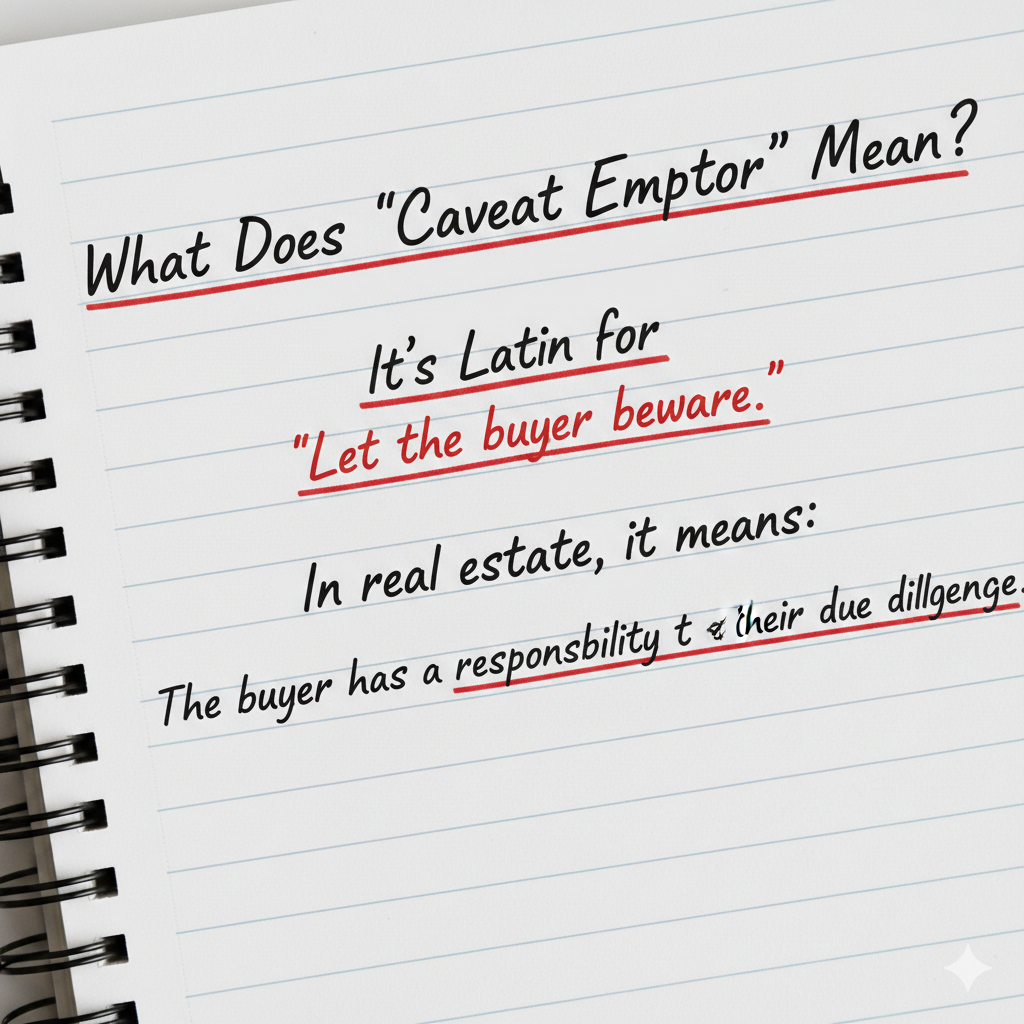
2 What Does “Caveat Emptor” Mean?

It’s Latin for

“Let the buyer beware.”

In real estate, it means:

The buyer has a responsibility to do their due diligence.

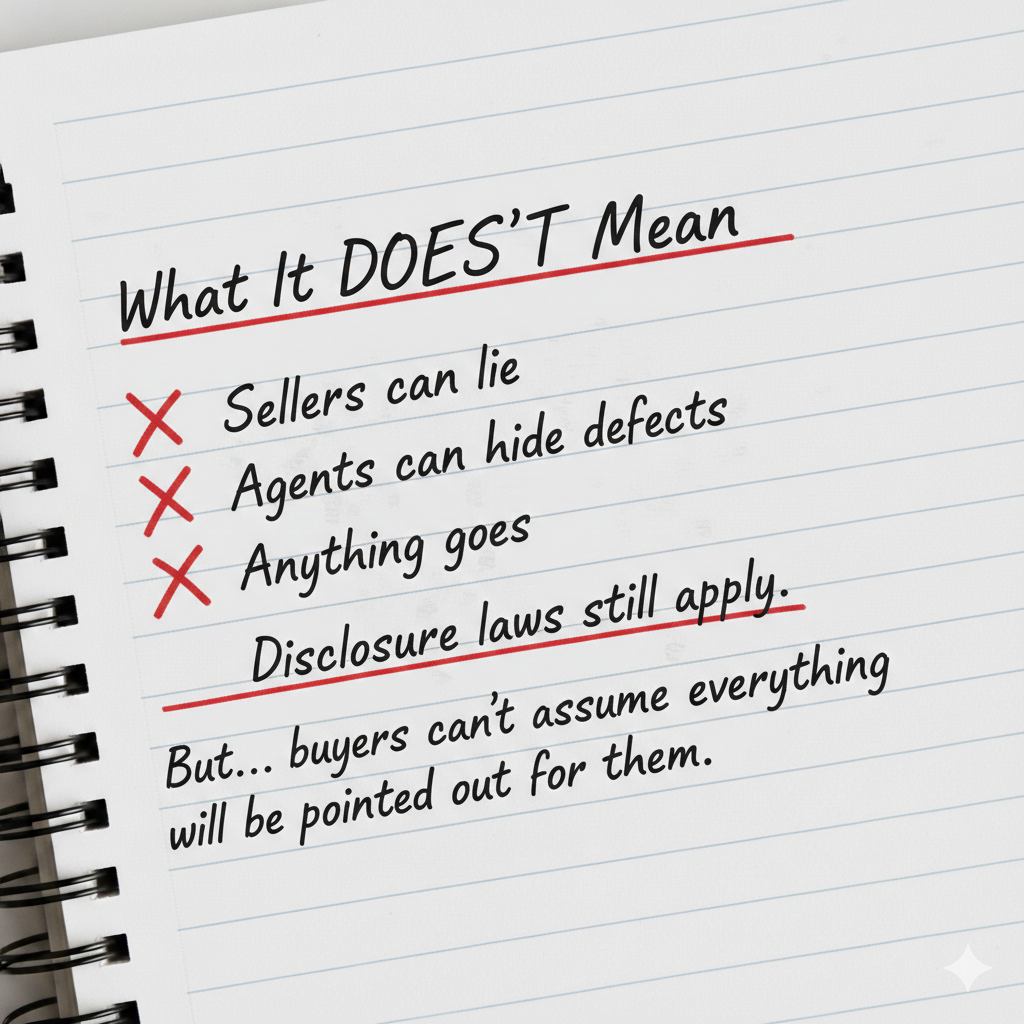
3 What It DOESN’T Mean

❌ Sellers can lie

❌ Agents can hide defects

❌ Anything goes

Disclosure laws still apply.

But… buyers can’t assume everything will be pointed out for them.

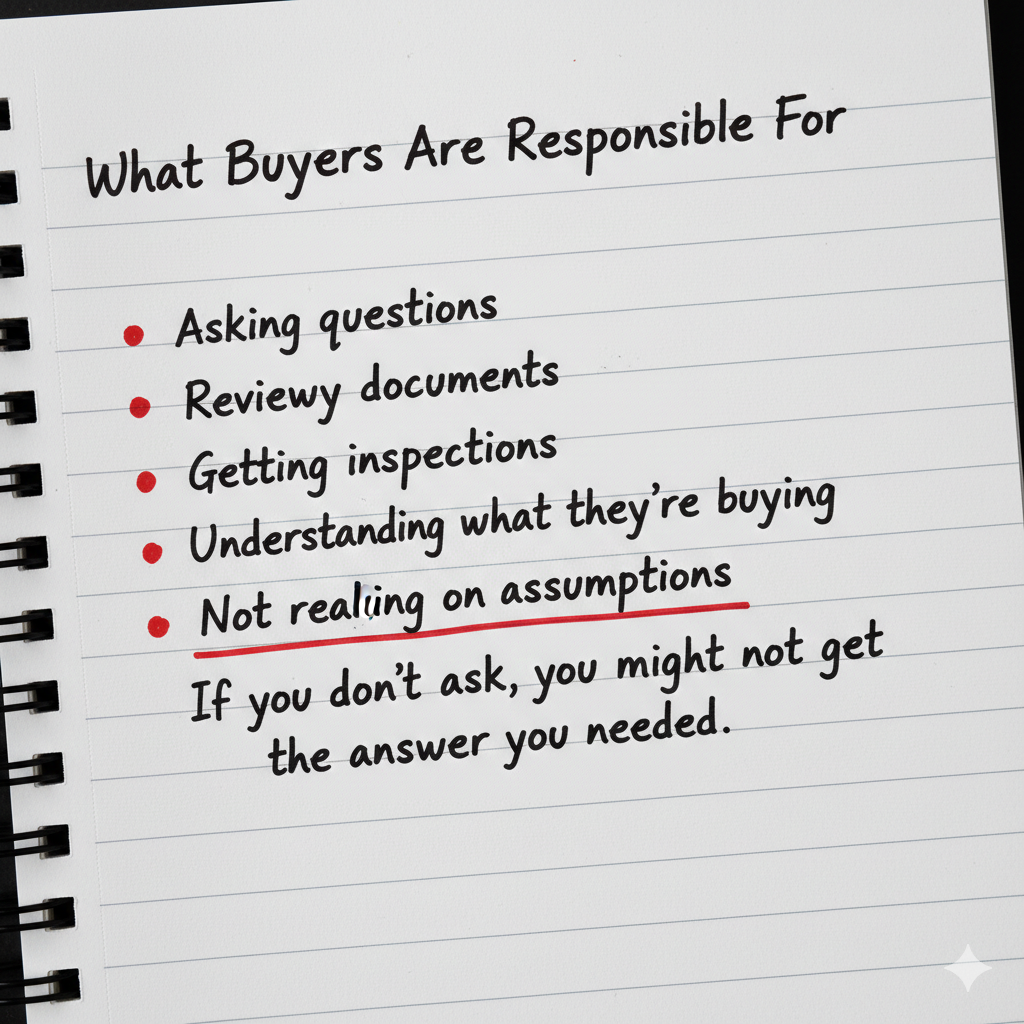
4 What Buyers Are Responsible For

• Asking questions

• Reviewing documents

• Getting inspections

• Understanding what they’re buying

• Not relying on assumptions

If you don’t ask, you might not get the answer you needed.

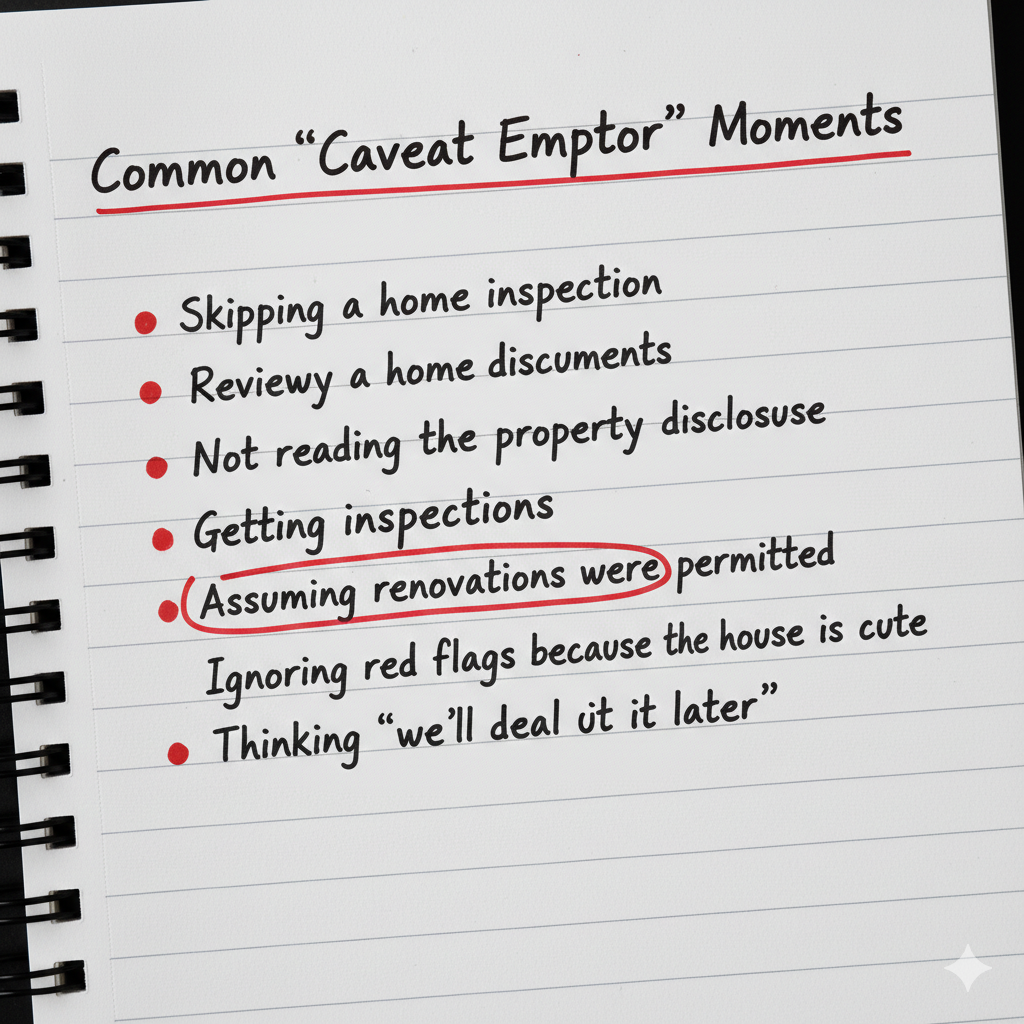
5 Common “Caveat Emptor” Moments

• Skipping a home inspection

• Not reading the property disclosure

• Assuming renovations were permitted

• Ignoring red flags because the house is cute

• Thinking “we’ll deal with it later”

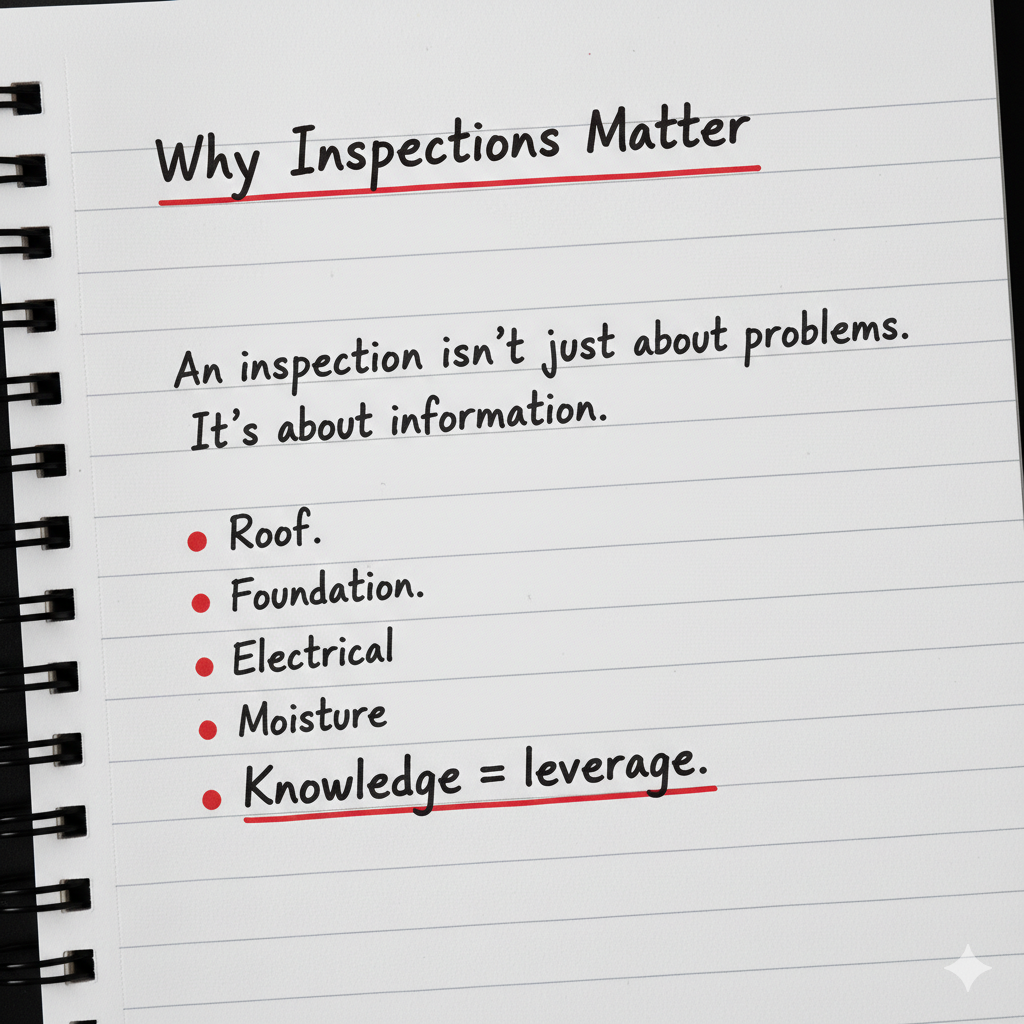
6 Why Inspections Matter

An inspection isn’t just about problems.

It’s about information.

Roof.

Foundation.

Electrical.

Plumbing.

Moisture.

Knowledge = leverage.

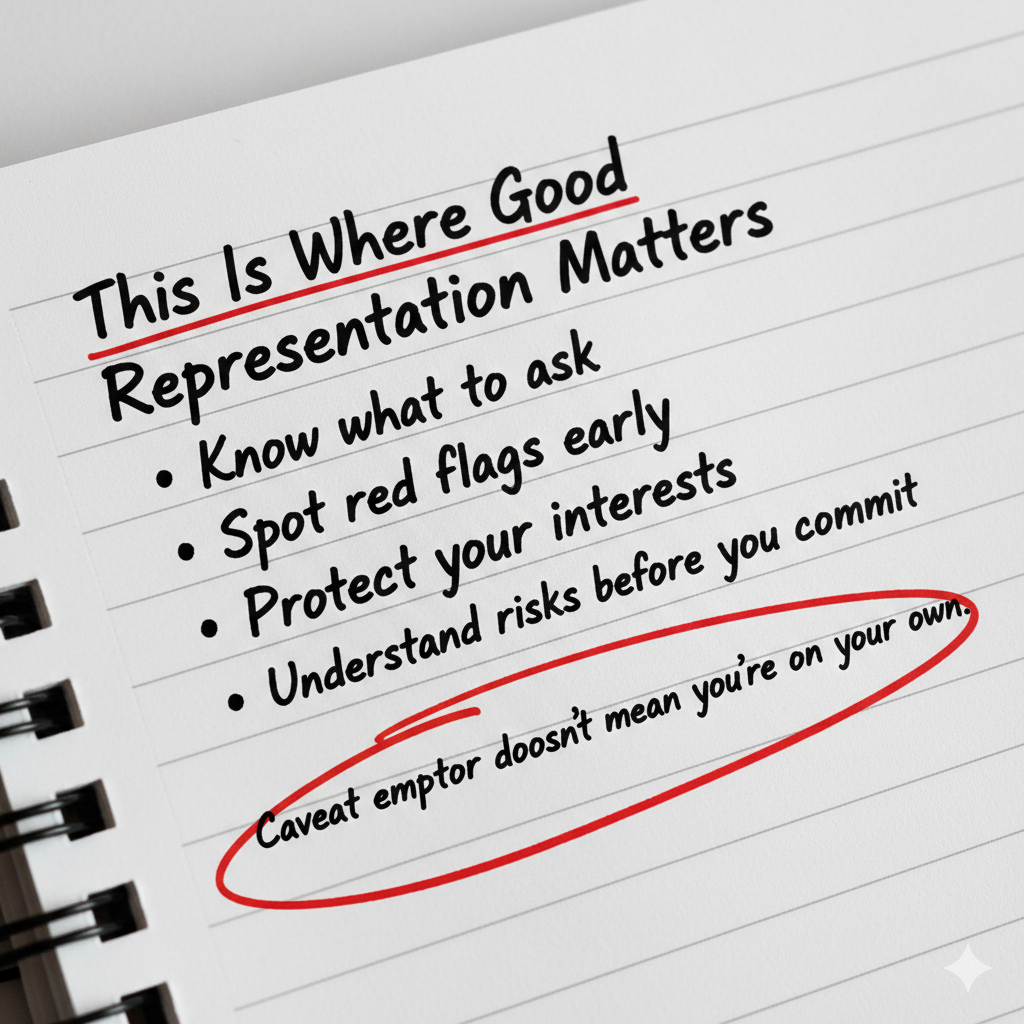
7 This Is Where Good Representation Matters

A good agent helps you:

• Know what to ask

• Spot red flags early

• Protect your interests

• Understand risks before you commit

Caveat emptor doesn’t mean you’re on your own.

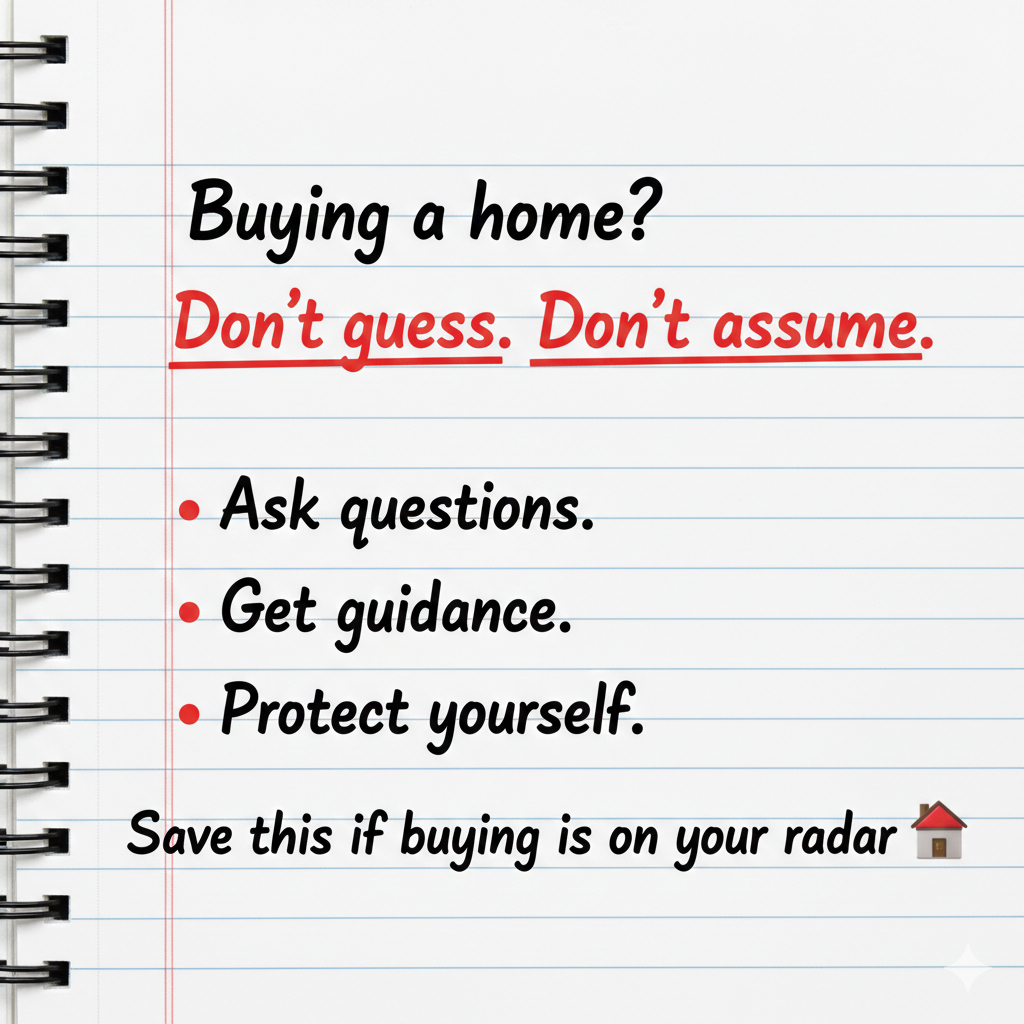
8 Buying a home?

Don’t guess. Don’t assume.

Ask questions. Get guidance. Protect yourself.

Save this if buying is on your radar 🏡

Have You Heard The Phrase: Caveat Emptor?

You might hear the phrase "caveat emptor" in real estate and think it sounds intimidating or outdated.🤔

It simply means “let the buyer beware.”

In real-life terms?

It means buyers have a responsibility to ask questions, review information, and understand what they’re buying, instead of assuming everything will be flagged for them automatically.

That doesn’t mean sellers can hide issues.

And it definitely doesn’t mean agents can be misleading.👀

Disclosure rules still apply.

But I see buyers get into trouble when they skip inspections, don’t read the paperwork, or fall so hard for a home that they ignore the things that actually matter long-term.

Caveat emptor isn’t about fear; it’s about awareness.

A good home inspection, careful review of disclosures, and the right guidance can save you from expensive surprises later. Not because something is “wrong,” but because information matters when you’re making one of the biggest purchases of your life.🧐

This is also why representation matters. My role is to help buyers slow things down, ask the right questions, and fully understand the home before committing, not after.

If buying is on your radar this year and you want someone who protects your interests, educates you through the process, and helps you make confident decisions, I’m always happy to talk.

Save this for later or send it to someone house hunting right now 🏡

Let’s talk about something hard to hear

Let’s talk about something hard to hear, but important to know.

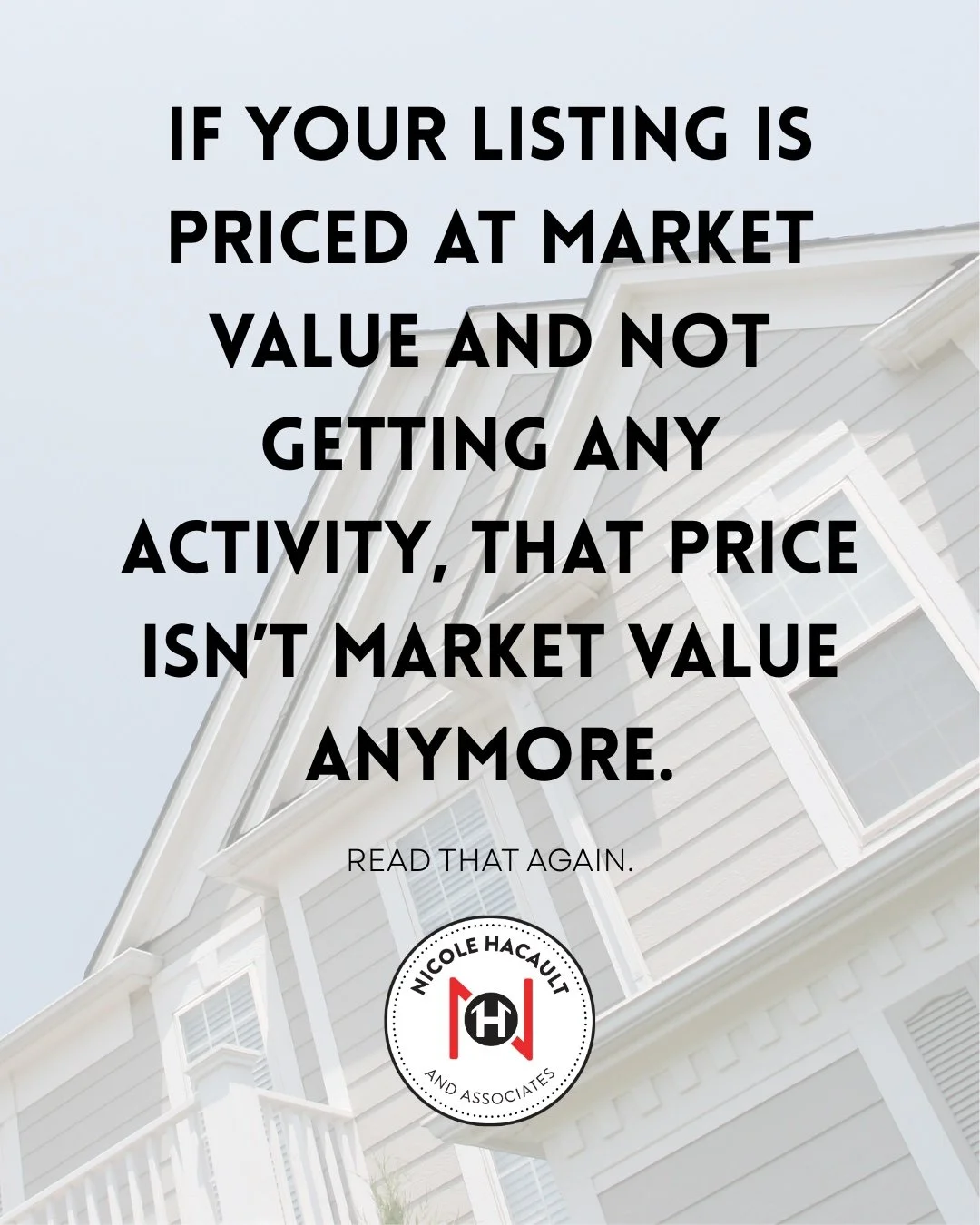
If your home is priced at market value and you’re getting little to no activity, that price may no longer be market value.

Not because your home isn’t beautiful.

Not because it’s not worth it.

But because the market shifted, buyers noticed before sellers did.

This isn’t about lowering your price out of desperation.

It’s about staying aligned with what buyers are willing to pay today.

Because pricing isn’t a one-time decision. It’s a strategy.

And in a market where buyers have options, small missteps can mean big delays.

🏡 River Park South Weekly Market Update 🌟

Hey everyone! It’s time for your weekly dose of real estate insights from River Park South. 📈

For this week:

🔥  5 homes sold in River Park South

🏠  5 new listings have just hit the market

🤩  6 homes on the market

The market is buzzing with activity! Whether you’re looking to buy, sell, or stay informed, we have the latest trends and stats.

Have questions about the market or need personalized advice? I’m here to help! Feel free to reach out anytime.

🔗 Watch the full video for all the details. And don’t forget to like, share, and comment!

Home Buying Can Feel Scary; We’re Here To Change That

Women are buying homes differently now, and we love to see it!

Comment or DM to get your tickets to Nailed It - A Woman's Guide to Home Ownership.

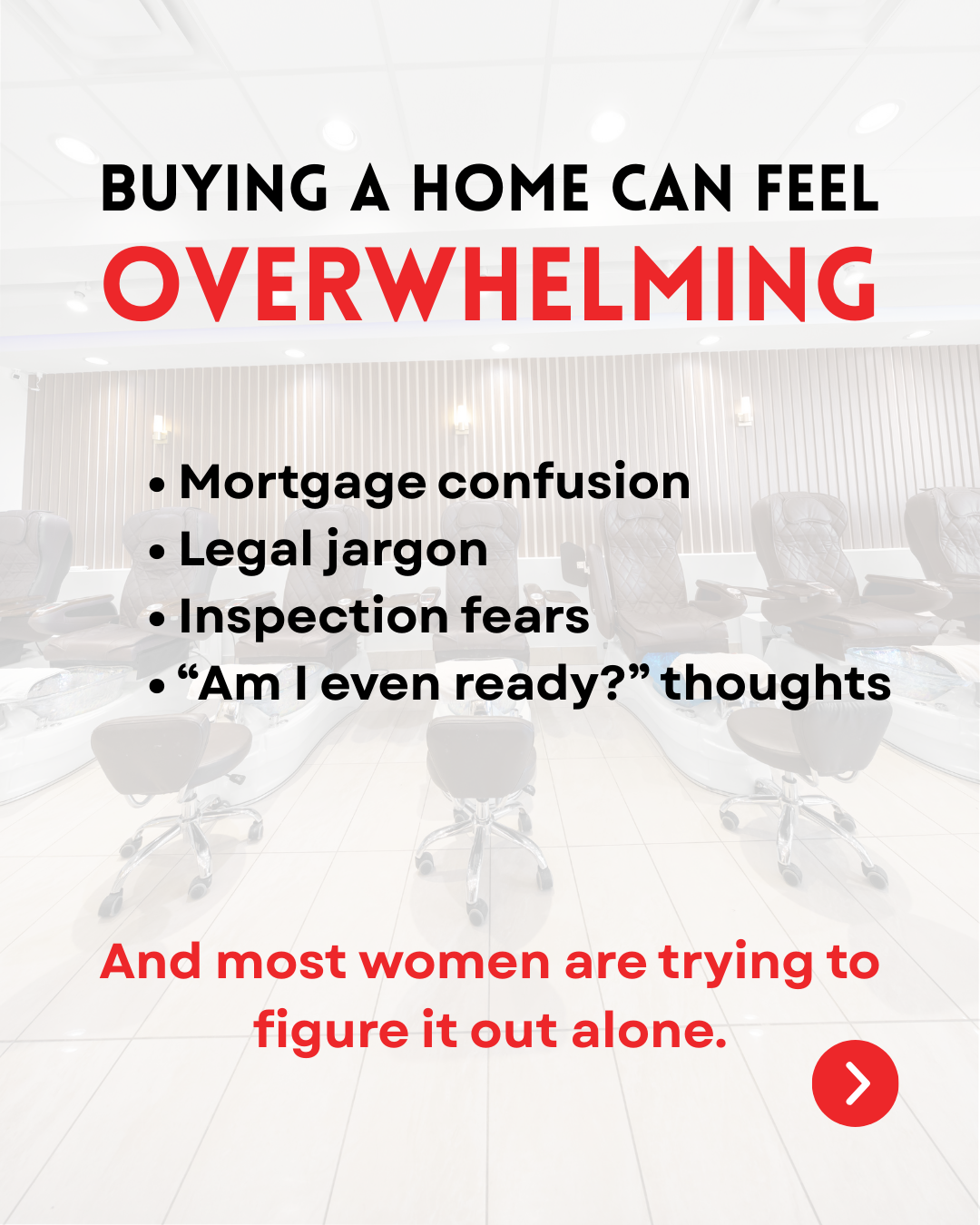
This event is about:

• asking the questions you’ve been afraid to ask

• understanding your options

• feeling confident, not overwhelmed

• and doing it in a space that feels fun, not stuffy

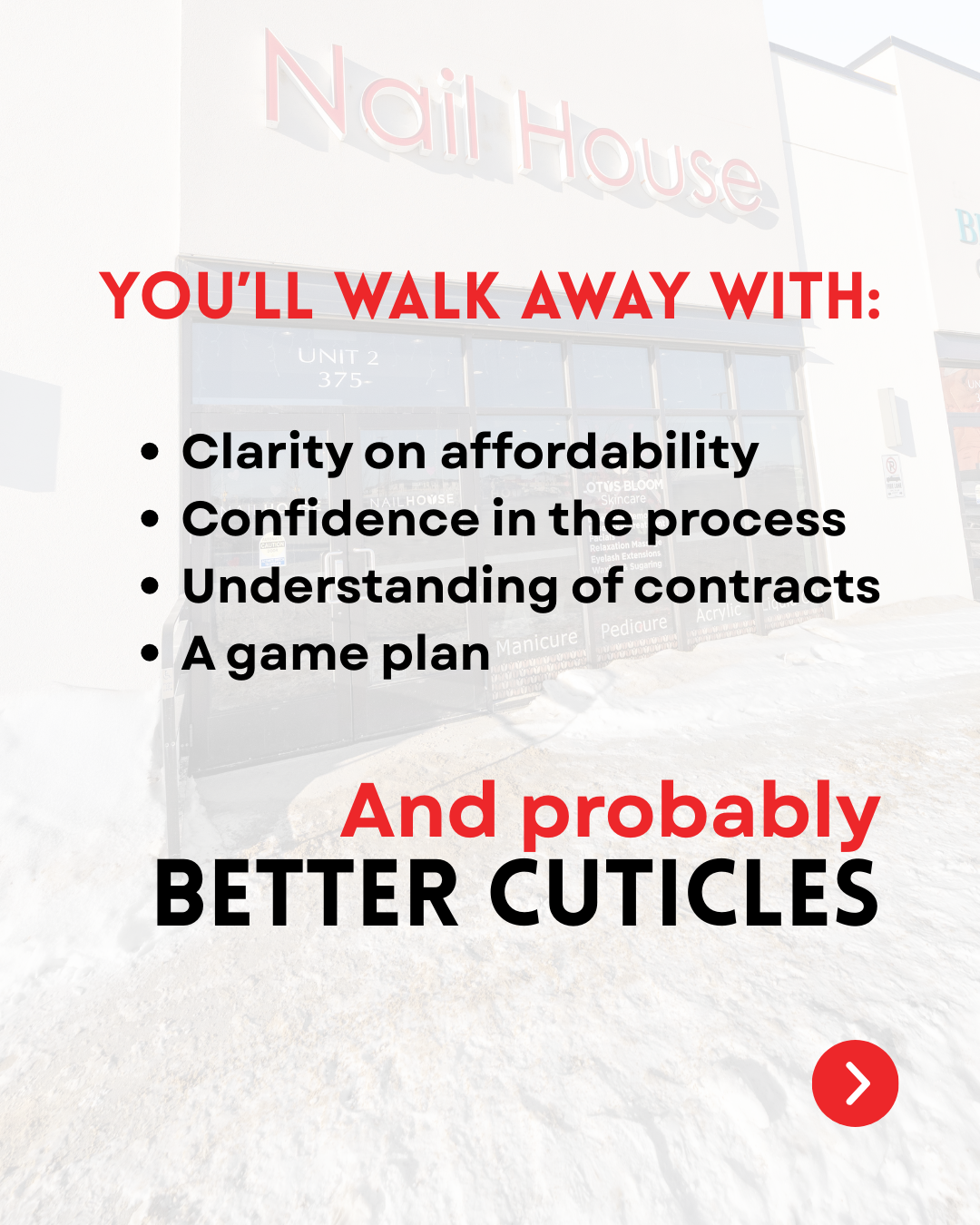
Nails + knowledge = 💅🏽🏡

Winnipeg | International Women’s Day

Nail House Bridgewater 

March 8th 3:30 

Tickets are $10, and you get a $60 gift card for nail service of your choice.

Nailed It: A Woman’s Guide to Home Buying in Winnipeg

Are you wondering how to buy a home in Winnipeg with confidence and clarity—without feeling overwhelmed or alone in the process?

If you’ve been thinking about home buying in Winnipeg but aren’t sure where to start, this event was created for you. Nailed It: A Woman’s Guide to Buying a Home is designed to give you the knowledge, strategy, and confidence you need to move forward.

Why This Event Matters for Women in Real Estate

Buying a home is one of the biggest financial decisions you’ll ever make. And while there’s plenty of information online, it’s often scattered, confusing, or not tailored to your specific situation.

This event brings everything together in one place.

Whether you’re:

  1. A first-time buyer

  2. Recently separated or divorced

  3. Planning for long-term financial independence

  4. Or simply ready to invest in yourself

You deserve clarity about how to buy a home in Winnipeg—without pressure or confusion.

This evening is focused on education, empowerment, and real-world answers.

What You’ll Learn About Home Buying in Winnipeg

At Nailed It, you’ll hear directly from experienced professionals who guide buyers through the process every day:

  1. Karen Beckingham – Mortgage Broker

    Learn how mortgage pre-approvals work, what lenders look for, and how to position yourself financially before you start shopping.

  2. Samantha Wong – Real Estate Lawyer

    Understand what happens behind the scenes during closing, what legal documents mean, and how to protect yourself throughout the transaction.

  3. Emma Tippett – Home Inspector

    Discover what inspections really uncover, how to interpret findings, and how to make informed decisions about a property.

Together, we’ll walk through the full buying journey—from financing to possession—so you leave with a practical, step-by-step understanding of how to buy a home in Winnipeg.

What Makes This Winnipeg Event Different?

This isn’t a sales pitch.

It’s a supportive, information-packed session built specifically to help women make confident real estate decisions.

You’ll have the opportunity to:

  1. Ask questions in a welcoming environment

  2. Learn what to expect before you start house hunting

  3. Understand common mistakes buyers make

  4. Connect with other women navigating similar goals

Women in Real Estate aren’t just professionals—we’re also homeowners, investors, and decision-makers. This event is about giving you the tools to step into that role fully prepared.

Who Should Attend?

You’ll benefit from this event if you:

  1. Are thinking about buying within the next 6–18 months

  2. Feel unsure about affordability or mortgage qualification

  3. Want to understand the legal and inspection process before making an offer

  4. Prefer learning in a collaborative, community-focused setting

If home buying in Winnipeg has been sitting on your “someday” list, this is your opportunity to turn someday into a strategy.

Your Next Step Toward Buying a Home in Winnipeg

Confidence doesn’t come from guessing. It comes from understanding.

If you’ve been searching for clear guidance on how to buy a home in Winnipeg, this event was built with you in mind.

Seats are limited—and conversations like these fill up quickly.

👉 Register before it sells out.

I would love to see you there and help you take your next step with clarity and confidence.

Nailed It: A Women’s Guide to Buying a Home

Women are buying homes differently now, and we love to see it!⁠ ⁠ Comment or DM to get your tickets to Nailed It - A Woman's Guide to Home Ownership.⁠ ⁠

This event is about:⁠ ⁠

• asking the questions you’ve been afraid to ask⁠ ⁠

• understanding your options⁠ ⁠

• feeling confident, not overwhelmed⁠ ⁠

• and doing it in a space that feels fun, not stuffy⁠ ⁠ ⁠

Nails + knowledge = 💅🏽🏡⁠

Winnipeg | International Women’s Day⁠ ⁠ Nail House Bridgewater ⁠ ⁠ March 8th 3:30 ⁠ ⁠ Tickets are $10, and you get a $60 gift card for nail service of your choice.

Closed Curtains Could Be Costing You

Did you know that keeping your curtains closed could be costing you your windows?😮 That closed curtain is trapping the hot sunlight☀️ against the glass and causing the seals to weaken, especially on those south-facing windows. 

To prolong the life of the curtains, please open them and let the sunlight in. It will save you years and thousands of dollars💰 on your windows!

Empowered women make powerful home-buying decisions

Women are buying homes differently now, and we love to see it!🤩

Comment or DM to get your tickets to Nailed It - A Woman's Guide to Home Ownership.

This event is about:

• asking the questions you’ve been afraid to ask

• understanding your options

• feeling confident, not overwhelmed

• and doing it in a space that feels fun, not stuffy

Nails + knowledge = 💅🏽🏡

Winnipeg | International Women’s Day

Nail House Bridgewater 

March 8th 3:30 

Tickets are $10, and you get a $60 gift card for nail service of your choice.

How to Improve Your Credit Score Before Buying a Home

What are the best ways to improve your credit score so you can qualify for a mortgage?

To boost your credit score before buying a home, focus on reducing debt, making on-time payments, and managing your credit responsibly. These steps can make a big difference when it comes time to qualify for a mortgage—and get a better rate.

Why Your Credit Score Matters When Buying a Home

Your credit score plays a big role in your mortgage approval and the interest rate you’ll get. Lenders use it to assess how reliable you are with debt—and it can impact whether you’re approved, how much you can borrow, and what your monthly payment looks like.

If your score is on the lower side, don’t panic. Improving your credit doesn’t have to take years. With the right strategy, you could start seeing results in just a few months.

Tip #1: Make Payments On Time, Every Time

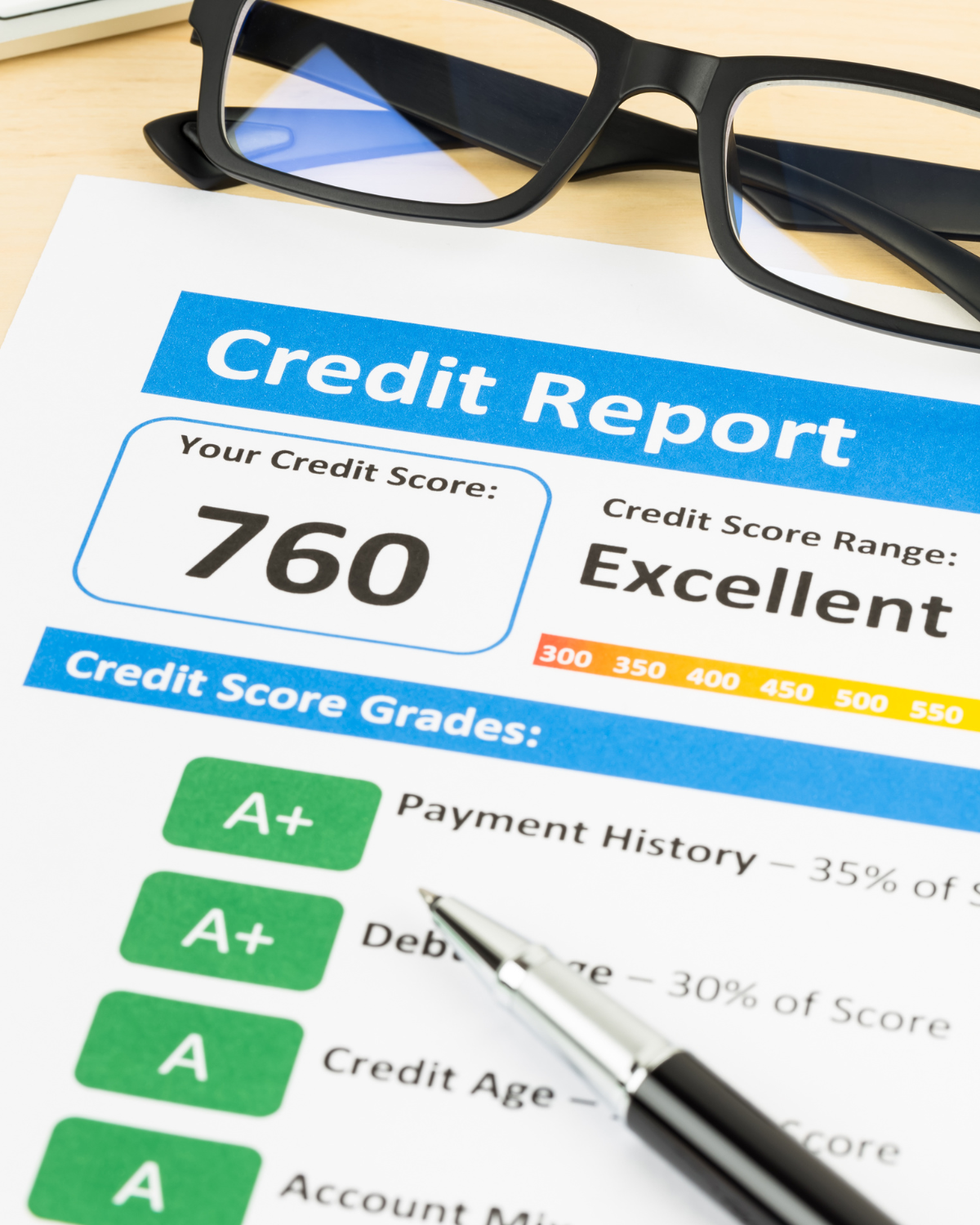
Payment history makes up 35% of your credit score. That means even one missed payment can drag your score down.

Set up reminders or auto-pay for:

  1. Credit cards

  2. Car loans

  3. Student loans

  4. Any other debt

Even paying the minimum on time is better than missing a payment.

Tip #2: Pay Down Credit Card Balances

Your credit utilization ratio—how much of your available credit you’re using—makes up another 30% of your score.

Try to keep your balances below 30% of your credit limits. If possible, aim for even lower.

For example:

  1. If you have a $5,000 credit limit

  2. Try to keep your balance under $1,500

Paying down even one credit card can give your score a quick lift.

Tip #3: Avoid Opening New Accounts

Every time you apply for a new credit card or loan, it triggers a “hard inquiry,” which can temporarily lower your score.

Unless necessary, avoid taking on new debt while preparing to buy a home. Focus instead on managing your current accounts wisely.

🎥 Want help mapping out a plan?

Reach out, and I can connect you with the best lenders to help get you on the right path.

Tip #4: Don’t Close Old Accounts

It might seem smart to close old or unused credit cards, but that can actually hurt your score. Why?

  1. You reduce your available credit (which affects your utilization ratio)

  2. You shorten your credit history

Unless a card has high fees or is causing trouble, consider keeping it open and active with small, manageable purchases.

Tip #5: Check Your Credit Report for Errors

Sometimes credit scores drop because of mistakes—like accounts you never opened or payments marked late that weren’t.

You can request a free credit report from:

  1. Equifax Canada

  2. TransUnion Canada

Review everything carefully and dispute any inaccuracies you find.

Final Thoughts: You’re Closer Than You Think

Improving your credit score might feel overwhelming, but small, consistent actions go a long way. Whether you’re 3 months or 12 months away from buying a home, the best time to start is now.

If you’re thinking about buying in Winnipeg and want personalized guidance, let’s chat. I can help you prepare your credit, navigate your mortgage options, and start the path toward homeownership.

Ready to Talk Strategy?

📅 Schedule a free consult with Nicole Hacault

🎥 Watch my video on credit scores + mortgages

Winter is for winning, not waiting

We hear you. Taking your house off the market for the winter feels like defeat.

You’re stressed, exhausted, and convinced the market just didn’t “get” your home.

But here’s the cold, hard truth: The market doesn’t owe you anything. It simply reflects the product you offered.

This winter is your, let’s call it, “Off-Market Intervention”. It’s not a holiday; it’s a surgical, no-excuses rehab designed to fix the real problem.

Here are some tougher conversations we’ve recently had and want to share with you:

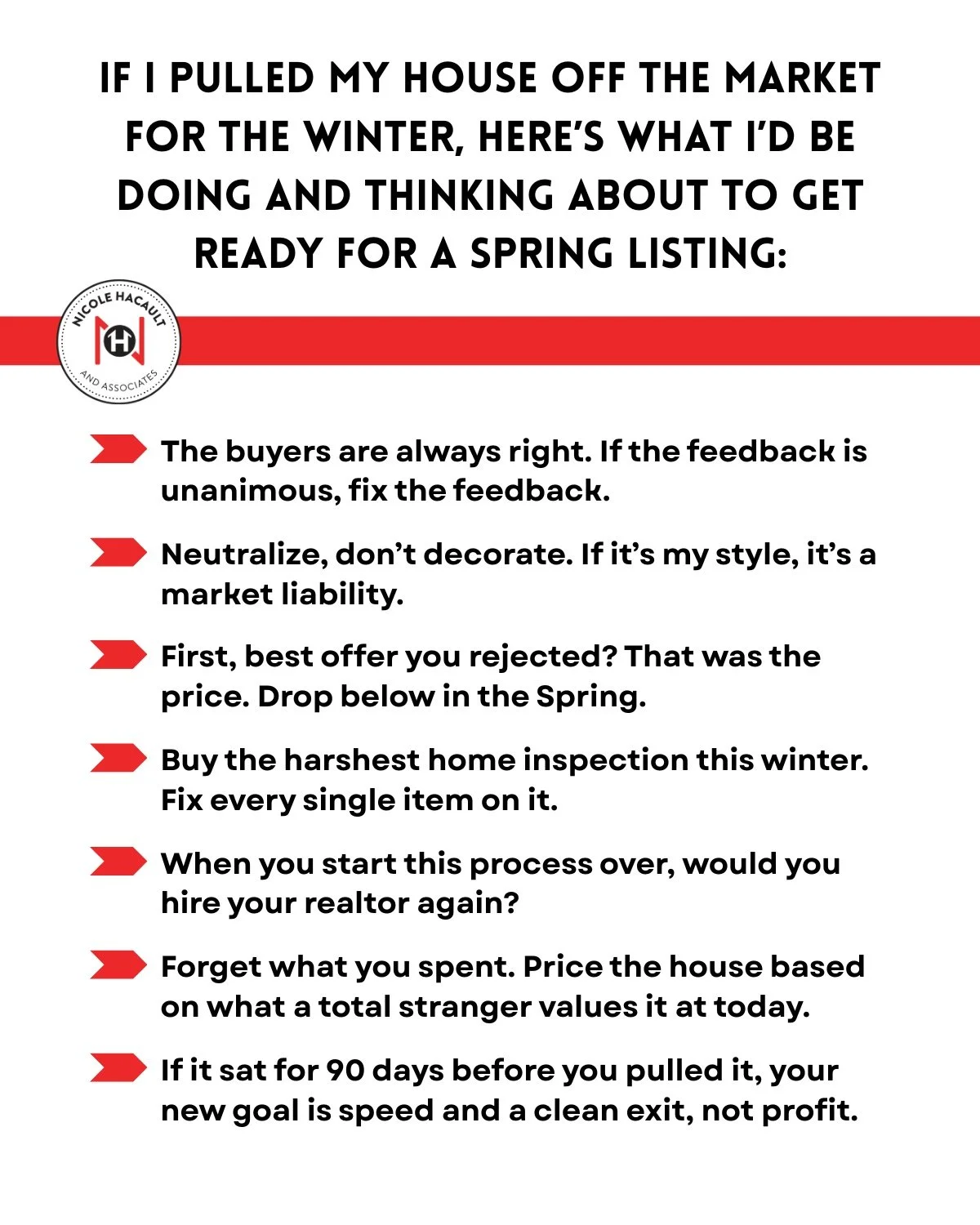
1. Stop pricing with your feelings. That $20k you spent on the new skylight? The market doesn’t care. Your anchor is stuck on your past investment, while buyers are focused purely on their future value. We are setting a price that reflects reality, not your sunk costs. That clarity is what stops the agonizing process of price drops.

2. Stop defending the flaws. Every single piece of negative feedback (the carpet, the smell, the clutter) is a gift. It tells you exactly what defect is costing you thousands. We stop justifying and start fixing the buyer’s complaints. This winter, we are selling certainty, not potential problems.
3. Sell the room, not your stuff. Buyers don’t see your antiques; they see small, cluttered spaces. We empty the closets, remove the personal style, and maximize the light until your home looks undeniably big and clean in the photos. Your goal is to be brutally neutral so buyers can finally envision themselves living there.

Finally, the hardest ask: would you hire the same realtor? We don’t need to go in too deep with this, but really consider who’s selling your biggest asset. It’s worth a conversation.

The payoff? We stop chasing buyers and start making them 𝘊𝘖𝘔𝘗𝘌𝘛𝘌. We eliminate the messy, stressful inspection process because we already fixed everything.

This spring, we aren’t re-listing the same house. We are launching a brand-new, premium product designed specifically to win.

🔥 Save this post if you’re pulling your listing. Winter is for winning, not waiting.