

Winter Thaws and Your Winnipeg Home’s Foundation
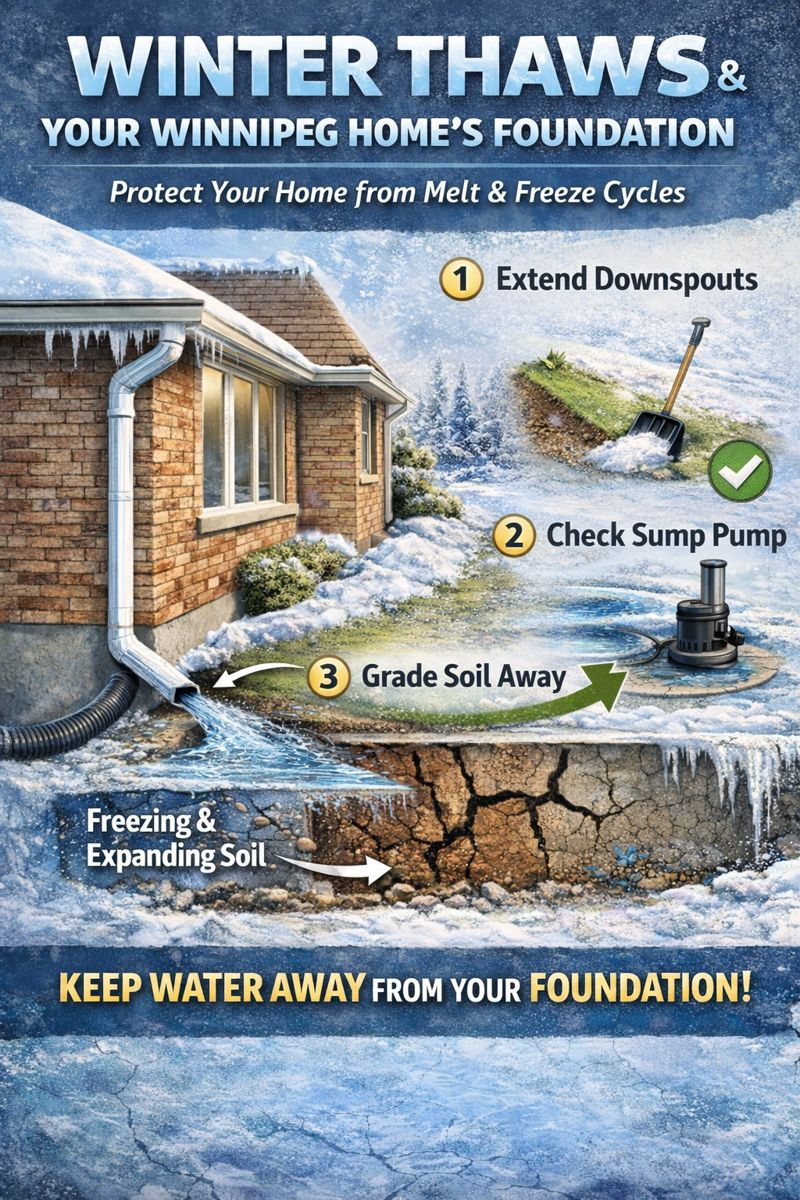
How can you protect your home’s foundation from winter melt, freeze‑thaw cycles, and drainage issues?
Short answer: In Winnipeg’s harsh winter climate, managing water before it reaches your foundation is essential — and that means keeping downspouts working, setting up sump pump discharge correctly for winter, and handling meltwater wisely to avoid soil saturation and foundation damage.
Why Winter Thaws Matter in Winnipeg
Winnipeg’s cold climate and soil conditions make freeze‑thaw cycles a big deal for foundations. When moisture in soil freezes, it expands — and when it thaws, that water can soften and saturate soil next to your house. Repeated freezing and thawing can put pressure on foundation walls and contribute to cracks, movement, or water seepage into basements over time.
During the thaw, water from melting snow and ice can accumulate rapidly, and if it isn’t directed away from the foundation, it can saturate the ground right where you least want it — against your walls.
Downspouts: Your First Line of Defence
Your home’s gutters and downspouts are designed to move roof water far away from the foundation — which is critical when snow melts quickly:
Clean gutters and downspouts in fall so melting snow and ice can drain freely.
Extend downspouts well away from the house — the farther from your walls the water lands, the less likely it is to soak into the soil beside your foundation. Experts often recommend extending several feet (often 6 feet or more) beyond the wall to avoid water pooling next to the house.
If downspouts are blocked by ice or too short, meltwater can spill down the side of your home or saturate the soil right at the foundation — exactly where you don’t want it.
Sump Pump Hoses in Winter
Your sump pump is a critical layer of defence when groundwater rises, especially during winter thaws.
Never unplug your sump pump in winter. Pumps must keep working even when it’s cold.
If water in the discharge line freezes, it can block flow — forcing the pump to run continuously against an ice jam, which can cause it to overheat or fail right when you need it most.
Winter‑ready setup: Many Winnipeg homeowners disconnect the small flexible hose and instead attach a larger pipe or elbow fitting and splash pad so discharged water drains slowly onto your yard without freezing inside the hose.
Always ensure your discharge points direct water onto your own property and not onto sidewalks, streets, neighbours’ yards, or public walkways — not only for good drainage but also to comply with local bylaws.
Managing Water During Melt/Freeze Cycles
Here’s the reality: Winnipeg’s winters aren’t consistently cold. Temperatures often fluctuate around freezing, which means snow and ice melt during the day and refreeze at night. That water has to go somewhere — and where it goes next matters:
Keep Water Moving Away from the Foundation
Good soil grading — the ground around your house should slope away from the foundation so water doesn’t pool and seep into the soil near your walls.
Clear snow away from the base of your home — snow piled against your wall melts directly into the soil next to the foundation and increases hydrostatic pressure.
When water collects near the foundation and then freezes, it can force soil against walls and create pressure that exacerbates cracks and foundation movement.
What Can Happen If Water Runs Back Toward Your House
If meltwater isn’t managed well:
✔ Soil can become oversaturated right beside your foundation.
✔ Saturated soil expands as it freezes — increasing lateral pressure on basement walls.
✔ Water can seep into tiny cracks and then freeze again, worsening those cracks.
✔ Basement walls and floors can develop moisture problems or even leaks.
Over time, these issues can lead to structural damage that’s expensive — and stressful — to fix.
Quick‑Prep Checklist (Winnipeg Winter)
Before winter hits (and during thaws):
Clean and extend downspouts far from your foundation.
Prepare your sump pump discharge so it won’t freeze in place.
Confirm ground slopes away from your house.
Move snow away from the home’s perimeter during thaws.
Regularly monitor your sump pump and discharge line during melt events.
Bottom Line: In Winnipeg’s unique climate, proactive water management through the winter and during thaws isn’t optional — it’s foundational. By keeping downspouts clear and extended, preparing your sump pump for winter operation, and ensuring water always flows away from your home, you’re protecting the most crucial part of your property: the foundation.