
What is the impact on downtown Winnipeg from The Forks redevelopment?
/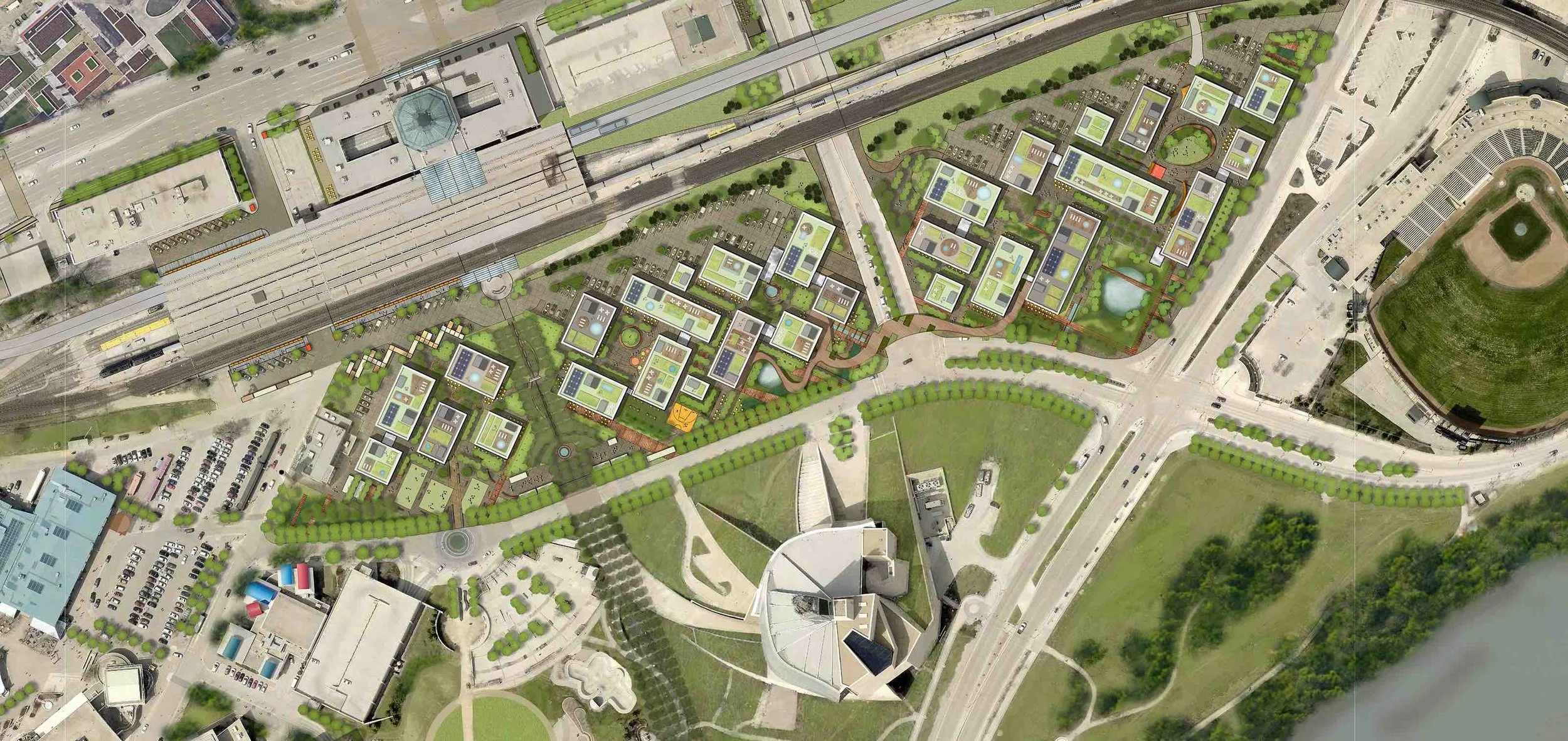
The Railside at The Forks development is adding up to 1,200 homes across three phases by 2040, with phase one, about 350 units in 10 mid-rise buildings, under construction since January 2026. It's one of the most significant drivers of downtown Winnipeg's residential growth in a generation.
What is the impact on downtown Winnipeg from The Forks redevelopment?
The Railside at The Forks development is converting surface parking into a mixed-use residential neighbourhood, with phase one delivering approximately 350 homes in 10 mid-rise buildings starting in January 2026. At full build-out across three phases by 2040, Railside is planned to house up to 1,200 residents, making it one of the most consequential drivers of the impact on downtown Winnipeg's residential growth in decades.
Key Takeaways
- Phase one of Railside at The Forks covers 3.5 acres and includes roughly 350 homes in 10 buildings of four to six storeys, with construction underway since January 2026.
- The full three-phase build-out targets completion in 2040 and could accommodate up to 1,200 residents on land that was previously surface parking.
- Railside is one of several projects that CentreVenture projected, in a September 2026 Winnipeg Free Press report, could add approximately 4,000 downtown units and 6,000 new residents over the next three to four years.
- The housing mix includes condominiums, market rentals, and deeply affordable units, making it relevant to a wider range of buyers and renters than a typical condo-only project.
- The project sits between The Forks Market and downtown Winnipeg, positioned to strengthen the pedestrian and cycling connection between the riverfront destination and the city core.
What is Railside at The Forks and why does it matter for downtown Winnipeg buyers?
For years, the land immediately north of The Forks Market, near Israel Asper Way and the Canadian Museum for Human Rights, was surface parking. That's changing in a big way.
According to The Forks, Railside is planned as a mixed-use neighbourhood of roughly 350 homes in phase one alone, spread across nine apartment buildings and one condominium building. The buildings are planned at four to six storeys. Construction broke ground in January 2026 and is expected to continue through at least 2027, so this is very much a project in motion, not a completed community.
The full vision is bigger. Across three phases, the project targets completion by 2040 with capacity for up to 1,200 residents. That's a long runway, and the timeline is subject to future approvals, financing, and construction progress. But the direction is clear: The Forks is evolving from a leisure destination into a place where people actually live.
I've been watching this area closely, because clients who ask me about downtown Winnipeg living want to understand what's coming, not just what's already built. Railside is the most significant piece of that answer right now.
How does Railside fit into the broader downtown housing picture?
Railside isn't the only project reshaping the core. A September 2026 Winnipeg Free Press report noted that CentreVenture anticipated approximately 4,000 downtown housing units opening over the following three to four years, potentially adding around 6,000 residents across multiple projects. Railside is identified as one of the major contributors, with roughly 400 units expected by 2028 and up to 1,200 by 2040.
Those are projections, not a guarantee. But they reflect a real shift in how Winnipeg's planning community is thinking about the downtown core. The City of Winnipeg's Downtown Residential Development Strategy identifies increased housing and improved connections within downtown as explicit planning objectives, and Railside aligns directly with that framework.
The impact on downtown Winnipeg from this wave of development is cumulative. More residents means more demand for everyday retail, more foot traffic on weekday evenings, and a stronger case for the kind of walkable urban neighbourhood that buyers in their 30s and 50s are both increasingly asking me about.
What types of homes will Railside include?
The housing mix is one of the more interesting aspects of this project. The Forks' own plans identify condominiums, market rental housing, and deeply affordable units, all within the same development. The exact breakdown by unit type hasn't been publicly confirmed in detail, so I won't assign percentages here. But the intention to include affordable housing alongside market-rate condos and rentals is meaningful: it signals a community-building approach rather than a straight luxury play.
For buyers specifically interested in purchasing rather than renting, the condominium component is the relevant piece. Timing and pricing will depend on how the phasing unfolds, and that's exactly the kind of evolving picture where having someone tracking the market closely makes a real difference.
| Railside Phase | Planned Units | Target Timeline | Status (as of October 2026) |
|---|---|---|---|
| Phase One | ~350 homes (10 buildings) | Construction 2026–2027+ | Under construction |
| Phases Two and Three | Up to ~850 additional homes | Future approvals required | Planned, not yet commenced |
| Full Build-Out | Up to 1,200 residents | Targeted 2040 | Long-range projection |
What does the impact on downtown Winnipeg mean if you're thinking about buying or investing near The Forks?
Here's the honest framing: Railside is under construction, not complete. As of right now, you'd be buying into a neighbourhood in transition, not a finished one. That cuts both ways.
On one hand, buying near a major development before it's complete has historically meant buying before the full price appreciation that comes with a transformed neighbourhood. On the other hand, construction timelines shift, phases get delayed, and the 2040 completion date is a planning target with a lot of variables between now and then.
What I tell buyers who ask me about this area: your decision shouldn't rest on what Railside will eventually become. It should rest on what the neighbourhood is worth to you today, with the upside of the development as a bonus rather than the whole thesis. That's a conversation worth having with specific numbers in hand, not a general calculation.
The Forks North Portage Partnership defines The Forks as a mixed-use, all-season Meeting Place at the junction of the Red and Assiniboine rivers, recreational, cultural, historical, and now residential. That's a strong foundation for a neighbourhood. The riverfront access, the proximity to the Canadian Museum for Human Rights, the existing market and public spaces: these aren't things that need to be built. They're already there. Railside is adding the residential layer on top of an amenity base that most new developments spend years trying to create.
The impact on downtown Winnipeg from this project will be felt gradually, not all at once. Phase one delivers roughly 350 homes. That's real density being added to a part of the city that has been underused as a residential address. CTV News Winnipeg confirmed that construction is replacing surface parking, which means the land use change is permanent, this isn't a temporary project.
For buyers considering downtown Winnipeg broadly, Railside is one piece of a larger puzzle. Whether it's the right piece for your situation depends on your timeline, your housing type preference, and your budget. That's where a market analysis, not a blog post, gives you the real answer.
FAQ
When will people be able to move into Railside at The Forks?
Phase one is under construction as of January 2026, with work expected to continue through at least 2027, so the first residents are unlikely to move in before 2027 at the earliest. The full three-phase development targets completion in 2040, though each phase will have its own timeline and will depend on approvals, financing, and construction progress.
How many homes will be built at The Forks?
Phase one is planned to include approximately 350 homes across 10 buildings. The full build-out across three phases is planned to accommodate up to 1,200 residents by 2040, according to The Forks' published plans. These are planning targets, not guaranteed unit counts.
Will Railside include affordable housing or only market-rate units?
The plan includes condominiums, market rental housing, and deeply affordable units within the same development. The specific breakdown of units by tenure type has not been publicly confirmed in detail, so the final proportion of affordable units relative to market-rate housing will depend on future phase approvals and financing arrangements.
Will the redevelopment reduce parking at The Forks?
Yes, Railside is being built on land that currently functions as surface parking, so some existing parking capacity will be converted to residential and public-realm uses. The Forks has not publicly confirmed a final parking replacement plan for all phases, so buyers and visitors should expect parking arrangements at the site to evolve as construction progresses.
How will Railside connect The Forks with downtown Winnipeg?
Railside is positioned on land between The Forks Market and the downtown core, near Israel Asper Way and the Canadian Museum for Human Rights, which places it at a natural pedestrian and cycling link between the two areas. The broader intent, consistent with the City of Winnipeg's Downtown Residential Development Strategy, is to improve access and mobility connections within downtown, Railside's location makes it a physical bridge between the riverfront destination and the city core.
Railside at The Forks is the clearest signal yet that downtown Winnipeg is being taken seriously as a place to live, not just visit. If you're weighing a purchase in the core, whether it's a condo near The Forks, a rental investment, or a first home in an urban setting, I'd be glad to walk you through what the current market looks like and where this development fits into your options.
Book a conversation with me here, no pressure, just a straight look at the numbers and what makes sense for your situation.
Equal Housing Opportunity. Nicole Hacault Personal Real Estate Corporation. This article is general information only and is not legal, tax, or financial advice, confirm your own numbers and circumstances with your real estate lawyer, tax advisor, or lender.