
How is Manitoba's expansion on nearby real estate in Fort Garry actually playing out?
/
The University of Manitoba's 30-year Visionary (re)Generation Master Plan and Building Bold capital program are reshaping the Fort Garry campus and putting surrounding neighbourhoods on buyers' and investors' radar, though verified price premiums specific to Fort Garry require a local market analysis.
How is Manitoba's expansion on nearby real estate in Fort Garry actually playing out?
The University of Manitoba's 30-year campus master plan and its Building Bold capital program are creating real planning signals for the Fort Garry housing market, but the verified evidence points to long-term structural change rather than a sudden price spike. Buyers and investors who understand what the university's own documents say, and what they don't say, are in a much stronger position than those acting on rumour alone.
Key Takeaways
- The University of Manitoba's Visionary (re)Generation Master Plan covers 30 years, making it a long-term land-use signal, not a near-term price catalyst.
- The university's Building Bold capital plan explicitly names neighbouring communities, including the future Southwood Circle development, as part of its planning context.
- The Winnipeg-wide residential-detached average price reached $468,679 year-to-date through August 2026, up 3% from the same period in 2025 and up 8% from the five-year average, according to Winnipeg Regional Real Estate Board data.
- In Q2 2026, single-detached homes across Winnipeg had just 1.5 months of inventory and a median 9 days on market, a competitive backdrop for any neighbourhood near a major institutional anchor.
- No Fort Garry-specific price premium is verifiable from publicly available board data; a local market analysis is the only reliable way to size the opportunity for a specific property.
What do the university's own planning documents actually say?
This is where I always tell buyers and investors to start: go to the source. The University of Manitoba's Campus Planning Office describes the Visionary (re)Generation Master Plan as a flexible framework for the Fort Garry campus over the next 30 years. It isn't a building-by-building construction schedule. It's a vision for a more walkable, accessible, and connected campus community.
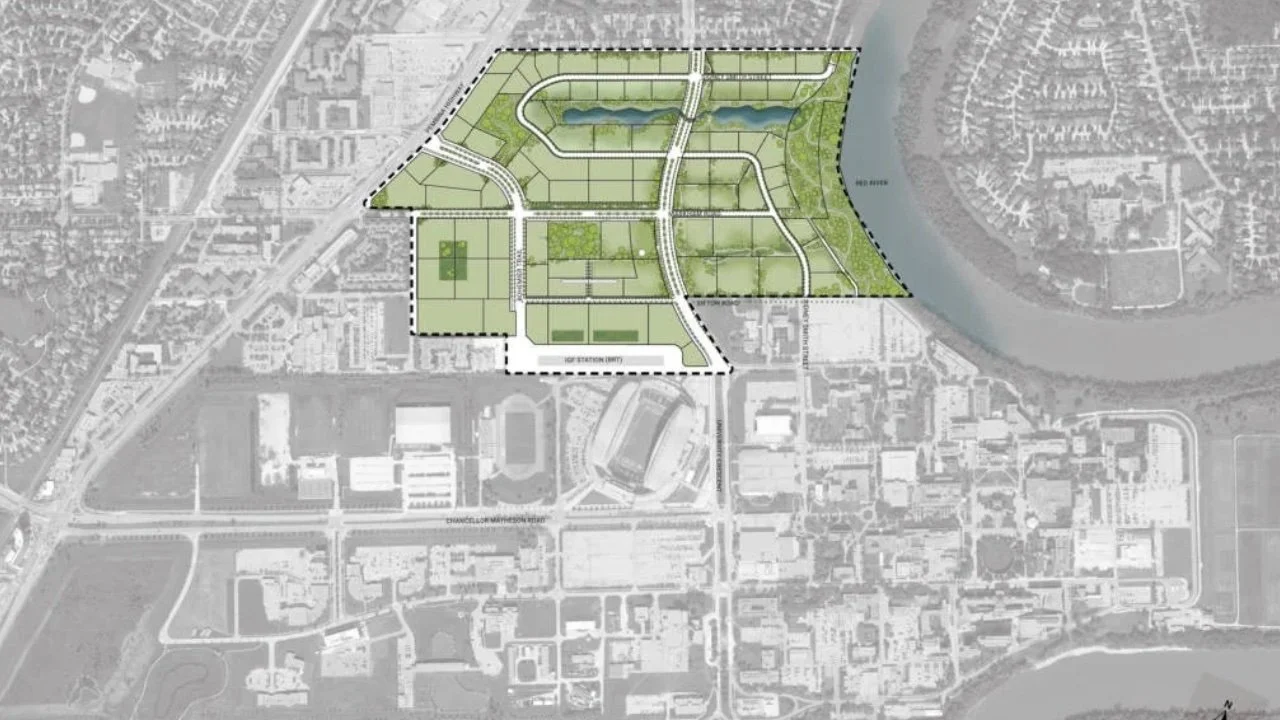
The Building Bold capital plan goes further. It identifies specific priorities for the Fort Garry campus: developing the campus core, improving sustainability and accessibility, creating green networks and high streets, and establishing east and south gateways. Critically, the plan explicitly names neighbouring communities, including the future Southwood Circle development, as part of its planning context. That's not an inference about proximity. The university is saying, in its own documents, that change on campus has implications for what's around it.
The most concrete near-term items in the April 2026 Board of Governors materials are power re-servicing and a Fort Garry Campus Daycare addition. These are real capital projects, but the documents don't attach verified completion dates or quantify off-campus housing demand. Anyone telling you those projects will move Fort Garry prices by a specific percentage is working from speculation, not data.
What is the Southwood Circle development?
Southwood Circle is identified in university planning documents as a future development in the area neighbouring the Fort Garry campus. The university flags it as relevant to how the campus relates to surrounding communities. The full land-use details, housing mix, construction schedule, and transportation plans for Southwood Circle should be confirmed through the City of Winnipeg's development records before any buyer or investor attributes a market effect to it. I'd want to see approved zoning and a construction timeline before I'd factor it into a purchase decision.
What does the Winnipeg market look like as a backdrop for this?
Manitoba's expansion on nearby real estate doesn't happen in a vacuum. The broader Winnipeg market is the water everything swims in, and the most recent figures paint a picture of a tight, seller-leaning market heading into fall 2026.
According to Winnipeg Regional Real Estate Board data, the residential-detached average price year-to-date through August 2026 was $468,679, up 3% from the same period in 2025 and up 8% from the five-year average. Condominiums averaged $288,834, also up 3% year over year. These are Winnipeg regional figures, not Fort Garry-specific numbers, and they shouldn't be read as proof that university expansion caused any particular price move.
The supply picture is equally telling. In Q2 2026, single-detached homes across Winnipeg had just 1.5 months of inventory and a median time on market of 9 days. Apartment units sat at 2.1 months of inventory with a median of 13.5 days on market. That's a competitive environment citywide, and neighbourhoods near a major institutional employer and student population tend to feel that pressure acutely.
Year-to-date through August 2026, the board reported 10,086 MLS sales, down 6% from the comparable 2025 period and down 2% from the five-year average. So volume is softer even as prices hold firm. That's worth noting if you're thinking about resale timing.
| Winnipeg Market Indicator | Most Recent Figure | Year-Over-Year Change |
|---|---|---|
| Residential-detached average price (YTD Aug 2026) | $468,679 | +3% |
| Condominium average price (YTD Aug 2026) | $288,834 | +3% |
| Single-detached months of inventory (Q2 2026) | 1.5 months | N/A (market conditions) |
| Single-detached median days on market (Q2 2026) | 9 days | N/A (market conditions) |
| MLS sales YTD through August 2026 | 10,086 | -6% |
Source: Winnipeg Regional Real Estate Board / CREA Statistics and WRREB Market Conditions. Winnipeg regional figures, not Fort Garry-specific.
Why Fort Garry-specific data matters more than the city average
The city-wide numbers give you the tide. What you really need to know is whether Fort Garry is riding higher than that tide, at the same level, or lower. The answer depends on the specific street, the property type, and how close you are to campus entrances, transit routes, and the areas named in the university's gateway and high-street plans. That's a conversation that requires pulling actual comparable sales in the submarket, which is exactly what I do before recommending any offer price to a buyer.
What should buyers and investors actually watch for?
Manitoba's expansion on nearby real estate plays out through a few concrete channels. Here's how I frame it for clients who are weighing a purchase in Fort Garry or the surrounding area.
Walkability and gateway access
The Building Bold plan emphasizes east and south gateways as entry points to the campus. Properties with strong walking or cycling access to those gateways tend to hold appeal for students, staff, and the businesses that serve them. That's a durable demand driver, independent of any single construction project.
The rental market near campus
A growing campus population, more students, more staff, more services, generally sustains demand for rental housing nearby. But "generally" is doing a lot of work in that sentence. Rental yield depends on purchase price, financing costs under the current mortgage stress test, property condition, and local vacancy rates. Before buying a rental property near the university, you want to see actual rental comparables for the specific unit type you're considering, not just a general sense that students need housing.
The Southwood Circle wildcard
The university's own planning documents flag Southwood Circle as a neighbouring development with implications for the campus context. Until the approved land-use details and construction timeline are confirmed through City of Winnipeg records, it's a signal worth monitoring rather than a number you can bank on. New supply in any form changes the calculus for nearby properties.
The 30-year horizon is real
I want to be straight with you on this: the master plan covers three decades. Some of what's in those documents will happen in the next five years. Some of it will look different in 2040 than it does today. Buying near a university because of a 30-year plan makes sense if the property works on its own fundamentals right now, and the long-term institutional presence is a supporting reason, not the whole thesis.
Frequently Asked Questions
Will University of Manitoba expansion increase home prices in Fort Garry?
University expansion tends to support demand for nearby housing over time, but there is no verified data establishing a specific Fort Garry price premium tied to the current campus plans. The Winnipeg-wide residential-detached average was $468,679 year-to-date through August 2026, up 3% year over year, but that's a regional figure. Whether Fort Garry is outperforming or tracking the city average requires a dedicated local market analysis.
Is buying a rental property near the University of Manitoba a good investment?
It can be, but the answer depends on the purchase price, your financing costs under Canada's mortgage stress test, local vacancy rates, and the specific property type. A growing campus population generally supports rental demand, but rental yield is a function of numbers, not proximity alone. I'd want to run actual rental comparables for your target unit type before calling it a good deal.
How might the Southwood Circle development affect Fort Garry real estate?
The University of Manitoba's Building Bold plan explicitly names Southwood Circle as a neighbouring development relevant to the campus's future context. The full impact depends on the approved housing mix, density, and construction timeline, which should be confirmed through City of Winnipeg development records. New supply near campus can affect both resale prices and rental rates depending on what gets built and when.
What types of housing are most sought after near the University of Manitoba?
Properties with strong walking or transit access to campus entrances tend to attract the widest range of buyers and tenants, including students, university staff, and people who value the neighbourhood's services and connectivity. Smaller detached homes, basement suites, and well-maintained condominiums are common choices near campus, but demand shifts with the student population cycle and overall Winnipeg market conditions.
Are Fort Garry homes near the university selling faster than homes elsewhere in Winnipeg?
Across Winnipeg, single-detached homes had a median of just 9 days on market in Q2 2026, which is already fast. Whether Fort Garry properties are moving faster or slower than that city average isn't verifiable from publicly available board data broken out by submarket. A local market pull for comparable sales in the area gives you the real answer.
The University of Manitoba's long-range plans are a genuine signal for Fort Garry real estate, and the Winnipeg market backdrop heading into fall 2026 is competitive. What those two things mean for a specific property on a specific street is where the real analysis lives. If you're weighing a purchase in Fort Garry or the surrounding area, I'm happy to pull the comparable sales, walk through the rental numbers, and give you a clear picture of what the opportunity actually looks like. Reach out to schedule a conversation, no pressure, just real numbers.
Equal Housing Opportunity. Nicole Hacault Personal Real Estate Corporation. This article is general information only and is not legal, tax, or financial advice, confirm your own numbers with your real estate lawyer, tax advisor, or lender.