

How does growth in Sage Creek and Bridgwater affect home values?
/
Development in Sage Creek and Bridgwater strengthens demand through improved amenities, greenspace, transportation access, and expanding housing choice. Winnipeg-region detached prices averaged $468,679 year-to-date through August 2026, up 3% from 2025, though neighbourhood-level premiums depend on specific property and timing.
How does growth in Sage Creek and Bridgwater affect home values?
Development activity in Sage Creek and Bridgwater strengthens buyer demand through better amenities, greenspace, transportation access, and a widening range of housing options. While Winnipeg-region detached prices averaged $468,679 year-to-date through August 2026 (up 3% from 2025), the specific effect on any individual home depends on its location, condition, and timing in the market.
Key Takeaways
- The Winnipeg-region average detached price reached $468,679 year-to-date through August 2026, up 3% from 2025 and 8% above the five-year average, according to the Winnipeg Regional Real Estate Board.
- Regional detached inventory sat at just 1.5 months in Q2 2026, with a median 9 days on market for sold detached homes, conditions that favour sellers across the city.
- Sage Creek's growth affects demand through multiple channels: expanding housing product, greenspace access, and Perimeter Highway proximity, not a single dollar-amount premium.
- New housing phases expected in late 2026 and early 2027 will add both more buyers and more competing listings, which means timing and pricing strategy matter more than ever.
- Bridgwater and Sage Creek are master-planned communities, and that structure tends to maintain consistent streetscapes and amenity investment over time, factors that support long-term resale appeal.
I get asked about Sage Creek's growth affects on home values a lot, and the honest answer is more nuanced than a headline percentage. Both Sage Creek and Bridgwater are genuinely compelling communities right now, but the reasons why come down to the specific mechanics of how growth translates into demand, and that's worth understanding before you buy or list.
What makes Bridgwater and Sage Creek different from other Winnipeg neighbourhoods?
Both are master-planned communities, which matters more than people realize. Master-planned development isn't just about aesthetics, it means phased infrastructure investment, coordinated greenspace, and long-term community governance that keeps the neighbourhood looking and functioning consistently as it fills in. That consistency tends to support resale appeal over time in ways that more organically-developed areas can't always replicate.
Bridgwater: southwest Winnipeg's established growth corridor
Bridgwater sits in the southwest quadrant of the city, and its draw is a combination of pond-and-pathway greenspace, proximity to the University of Manitoba, and relatively quick access to Bishop Grandin Boulevard and Kenaston. The community has been building out for well over a decade, which means many phases are mature, you get established trees, completed parks, and functioning retail nodes alongside the newer sections still under construction.
That mix of established and emerging is actually a strong buying environment. You're not waiting for amenities to arrive; they're already there. What's still coming is more housing product, which adds competition for new builds but also continues to draw buyers into the area, and buyer traffic benefits resale homes too.
Sage Creek: southeast Winnipeg's greenspace-forward community
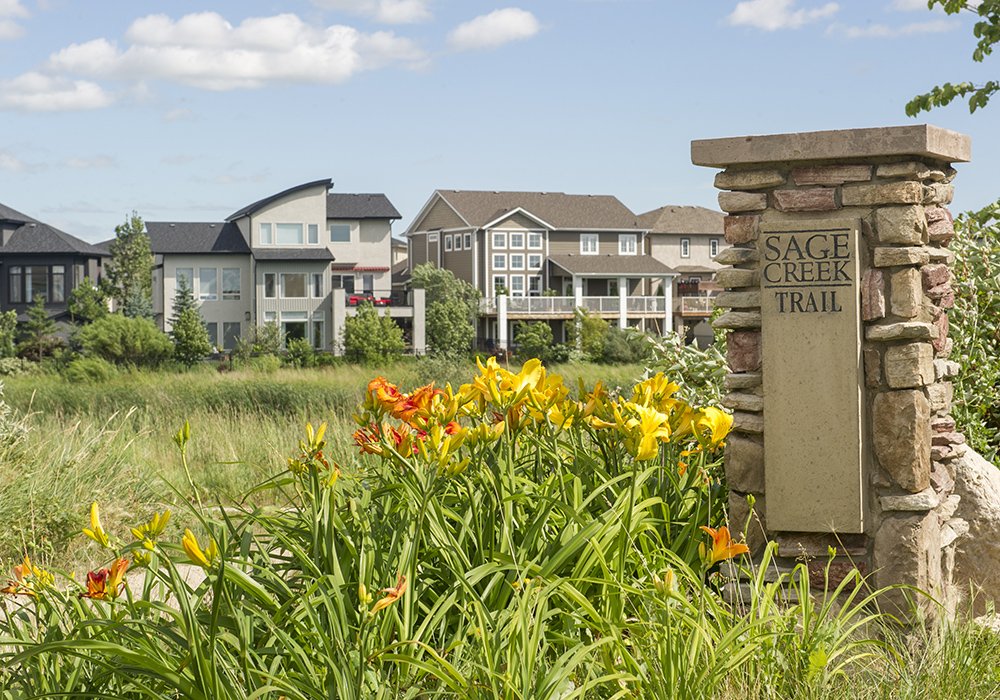
Sage Creek is positioned east of Lagimodière Boulevard in the southeast, and the City of Winnipeg's long-term planning documents identify it as part of a broader southeast growth area with adjacent future development planned. The community is built around wetland features and walking trails, and its access to the Perimeter Highway makes commuting to other parts of the city or heading out of town genuinely convenient.
Additional housing product, including larger-lot homes near wetland areas and smaller homes aimed at first-time buyers, is expected in late 2026 and into early 2027. That pipeline is a double-edged dynamic for existing owners: more development raises neighbourhood profile and attracts more buyers, but it also means more competing listings. If you own in Sage Creek and are thinking about selling, that timing question is worth talking through with someone who tracks the local absorption closely.
How does Sage Creek's growth affects the broader Winnipeg market backdrop?
The regional context matters here. According to the Winnipeg Regional Real Estate Board, August 2026 saw 1,326 regional sales, down 5% year over year, while active listings reached 4,102, up 13% year over year. That's a more balanced market than 2025, not a runaway seller's market.
At the same time, the year-to-date detached average of $468,679 is 8% above the five-year average, which tells you the underlying price trend has been meaningfully positive even if month-to-month movement has levelled off. The August monthly average came in at $439,216, which was actually down 3% from August 2025, a useful reminder that prices don't rise in a straight line.
On supply, CREA's Winnipeg market conditions data shows detached inventory at 1.5 months in Q2 2026, with a median of 9 days on market for sold detached homes. Townhouses came in at 12 days and apartment units at 13.5 days. These are region-wide figures, not Sage Creek or Bridgwater measurements, but they paint the competitive backdrop that buyers in those communities are stepping into.
| Winnipeg Region Metric | Q2 / YTD August 2026 | Year-over-Year Change |
|---|---|---|
| YTD average detached price | $468,679 | +3% vs. 2025 |
| August monthly detached average | $439,216 | -3% vs. August 2025 |
| Detached inventory (Q2 2026) | 1.5 months | +0.1 months vs. Q2 2025 |
| Median days on market, detached | 9 days | Unchanged vs. Q2 2025 |
| Regional sales (August 2026) | 1,326 | -5% vs. August 2025 |
| Active listings (August 2026) | 4,102 | +13% vs. August 2025 |
Source: Winnipeg Regional Real Estate Board, August 2026 Market Release. These are region-wide figures, not neighbourhood-specific data.
What actually drives value in a developing neighbourhood?
This is the question I walk my clients through whenever they're comparing a newer master-planned community against an established Winnipeg neighbourhood. Growth doesn't raise values automatically, it works through specific mechanisms, and understanding those helps you make a smarter decision about where and when to buy or sell.
Amenity completion and neighbourhood recognition
Buyers pay more for certainty. As schools, parks, retail, and transit connections come online in a developing area, the neighbourhood becomes easier to evaluate, and that reduced uncertainty tends to support prices. Both Bridgwater and Sage Creek have reached a stage where most buyers can see clearly what the community is and will be, which is a meaningful shift from the early build-out years when buyers were taking more of a leap of faith.
Transportation access
Sage Creek's Perimeter Highway access and Bridgwater's connections to Bishop Grandin and Kenaston are genuine quality-of-life factors. City of Winnipeg transportation planning continues to invest in the road network serving these growth areas, and commute convenience consistently shows up as a priority for buyers in survey data from CMHC's housing research.
Greenspace and walkability
Sage Creek's wetland trails and Bridgwater's pond-and-pathway system aren't just nice to look at, they're a differentiator in a market where CREA's buyer research consistently shows outdoor access as a top-three purchase motivator. Homes backing onto or near greenspace tend to hold their appeal through market cycles better than comparable homes on standard lots.
New-home competition as a two-sided factor
Here's the part that gets glossed over: ongoing new construction in a neighbourhood benefits resale homes by drawing buyers into the area, but it also gives those buyers an alternative. If a buyer can get a brand-new home with a builder warranty for a comparable price, some will take it. The practical implication for resale sellers in Sage Creek and Bridgwater is that condition and presentation matter more than in fully built-out areas. Your specific number, what your home is actually worth in this environment, depends on how your property compares to what builders are offering right now. That's exactly the kind of analysis I run before pricing any listing in these communities.
Frequently Asked Questions
Are homes in Bridgwater appreciating faster than the Winnipeg average?
There is no verified neighbourhood-level data in the current market that confirms a Bridgwater-specific premium over the Winnipeg-region average. The region-wide detached average reached $468,679 year-to-date through August 2026, up 3% from 2025. Whether a specific Bridgwater home has outperformed that average depends on its location within the community, housing type, and condition, a comparative market analysis against recent local sales is the only reliable way to answer that for your property.
Does new development in Sage Creek increase resale values?
New development can support resale values by improving amenities, raising neighbourhood profile, and attracting more buyers to the area, but it also introduces competing new-build listings. The net effect on any individual resale home depends on the pace of new construction, the price gap between resale and new builds, and how well the resale home is positioned on condition and price. It's a relationship worth tracking closely, not a blanket guarantee of appreciation.
Is Sage Creek still a good place to buy a home in 2026?
Sage Creek remains an active, growing community with greenspace access, Perimeter Highway convenience, and additional housing phases expected in late 2026 and early 2027. Regional detached inventory sat at 1.5 months in Q2 2026 with a median 9 days on market for sold homes, which reflects competitive buying conditions across Winnipeg. Whether Sage Creek is the right fit depends on your priorities, budget, and timeline, those details shape the answer more than any general market statement.
Does ongoing construction in Sage Creek help or hurt existing homeowners?
It does both, depending on where you are in the ownership cycle. Construction draws buyers into the area and funds ongoing amenity improvements, which supports demand for resale homes. At the same time, new builds give buyers an alternative and can set a price ceiling in some segments. Existing owners who plan to sell in the next one to two years should pay close attention to what builders are pricing and what's under contract nearby, that context directly affects how a resale home should be positioned.
What should buyers compare when choosing between Bridgwater and Sage Creek?
Compare the stage of build-out (Bridgwater is more mature; Sage Creek still has active phases coming), the greenspace and trail access each community offers, commute routes to your workplace, the mix of housing types available in your price range, and the proximity to the schools and retail nodes you'll use most. Neither community is objectively better, they suit different priorities, and the right choice comes down to which one fits your day-to-day life and long-term plans.
Both Bridgwater and Sage Creek are communities I know well, and the way growth translates into value is genuinely different street by street. If you're trying to figure out what your home is worth in this environment, or whether one of these communities makes sense for your next purchase, let's run through the specifics together.
Book a conversation with Nicole Hacault & Associates, I'll walk you through what the current data actually means for your situation.
Equal Housing Opportunity. Nicole Hacault Personal Real Estate Corporation. This article is general information only and is not legal, tax, or financial advice, confirm your own numbers with your real estate lawyer, tax advisor, or lender.